Assessing Tattoo Healing Progress
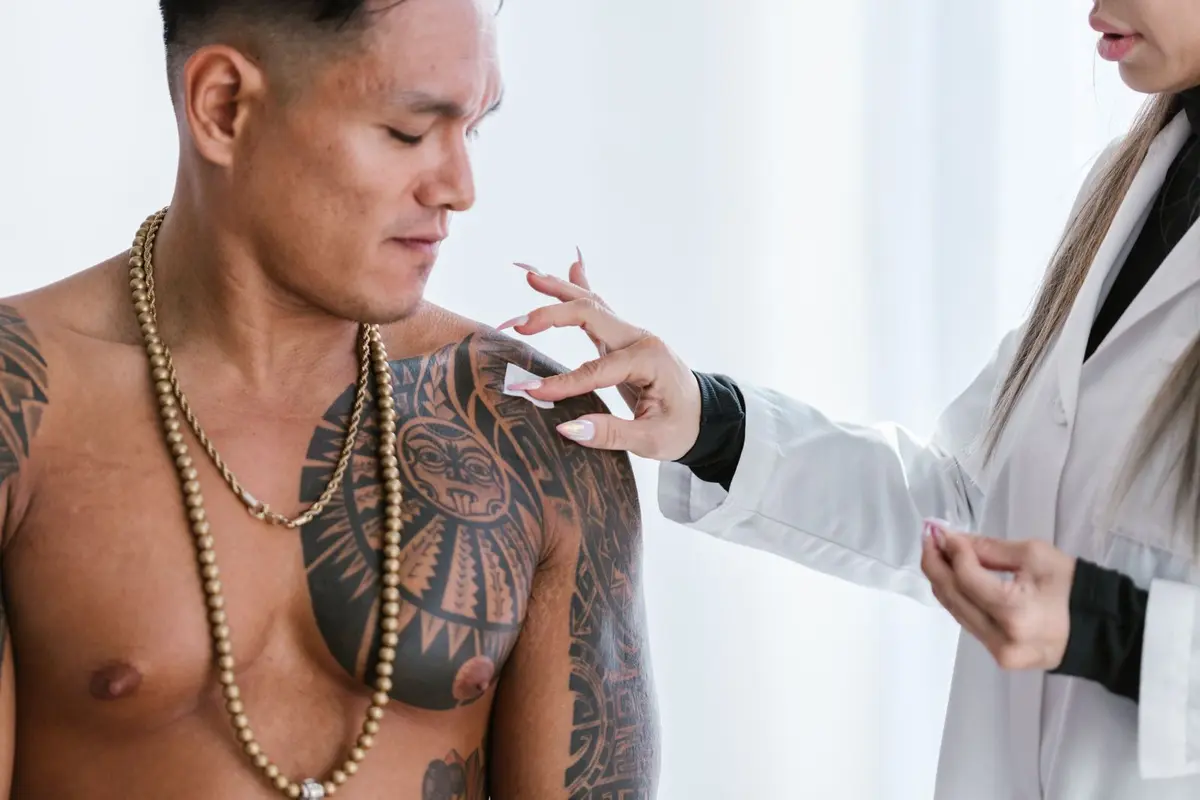
The timeline for surface healing of a tattoo is distinct from the biological integration of ink into the dermis. While the outer layer of skin typically settles within four weeks, the internal recovery continues beneath the surface. Identifying the correct stage of this process is necessary to avoid premature application of topical products.
This guide focuses on visual and tactile cues to determine when the skin barrier has regained its structural integrity. Once these signs are met, standard protective habits can be resumed.
- Difficulty
- Beginner
- Total time
- 4 weeks
- Cost
- Minimal
- Cadence
- Daily observation
Ingredients
- Broad spectrum SPF: Crucial for long-term pigment preservation after healing.
Tools List
- Fragrance-free, mild soap
Step by step
Monitor the primary barrier
During the first week, the tattoo functions as an open wound. The skin will appear red, slightly swollen, and will likely form a thin layer of exudate or light scabbing. Do not apply any products beyond basic cleansing to avoid trapping bacteria. Keep the area clean and avoid direct sun exposure during this phase.
Tip: Observe for extreme redness which may indicate a need for professional attention.Observe the peeling cycle
As the skin transitions into the peeling phase, flakes of ink-stained skin will naturally detach. Do not intervene by picking or rubbing these flakes. This is the stage where the skin feels tight and itchy as new epidermal cells emerge. The goal is to allow this exfoliation to happen entirely on its own.
Tip: Wear loose, breathable clothing to minimize friction.Monitor texture normalization
By the third week, the surface should be largely flat. If you pass a clean finger over the area, there should be no raised edges or crusting remaining. The skin might look slightly duller or appear to have a silver sheen, which is common as the new layer settles into the surrounding skin.
Tip: Avoid heavy lotions that may clog pores.Confirm full surface restoration
After one month, the skin should feel identical to the surrounding un-tattooed skin in terms of flexibility and resilience. If there is no residual tightness or sensitivity when applying light pressure, the barrier is considered restored. You may now return to routine maintenance, including the application of SPF.
Tip: Choose fragrance-free SPF formulations.
Trouble
What if the area still feels tight after four weeks?
A feeling of tightness may indicate dryness. Use a simple, non-comedogenic moisturizer to restore hydration, but continue to avoid strong actives or fragrances until the skin feels entirely normal.
Can I use SPF if the tattoo is still slightly flaky?
No. Introducing SPF or any topical product to peeling skin can clog pores and interfere with the natural sloughing of dead skin cells. Protect the tattoo with physical clothing instead.
Does the sun affect healing?
Yes. Direct sunlight can cause damage to the healing skin and disrupt the pigment settling process. Always use physical barriers like long sleeves or pants until the skin is fully closed.
How do I know if it is just dry or still healing?
Dry skin will flake uniformly and respond to light hydration. Healing skin will have specific, localized areas of crust or thickened scabbing that are resistant to simple moisturizing.
True healing is measured by skin texture, not by the absence of ink vividness.
Be patient with the biology of your skin. It knows what it is doing.
Once it has healed: SPF on tattoos, after-sun care and mineral vs chemical sunscreen.