Protecting Tattoos in Summer
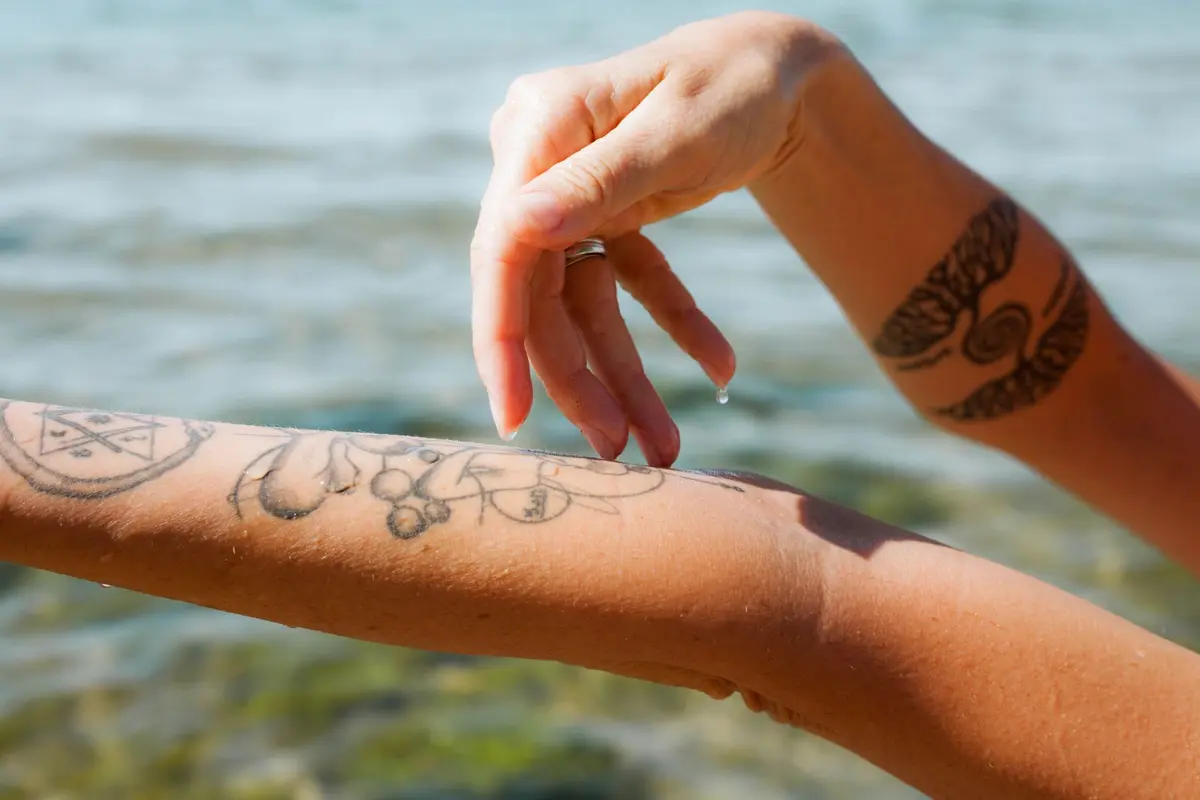
Sun exposure is the primary catalyst for the degradation of tattoo pigment. As ultraviolet rays penetrate the epidermis, they break down the ink particles housed in the dermis, leading to a loss of crisp lines and a shift in color saturation. During the summer months, managing this exposure requires a consistent, mechanical approach to shielding the skin.
This guide outlines the practical mechanics of physical protection and high-factor topical application. Consistent habits now determine the clarity of your work in the future.
- Difficulty
- Beginner
- Total time
- 15 minutes daily
- Cost
- Moderate
- Cadence
- Daily application
Ingredients
- Zinc Oxide: Provides a physical, non-reactive barrier to UV light.
- Ceramides: Replenishes the lipid barrier after daily environmental exposure.
Tools List
- Mineral sunscreen (SPF 50+)
- Tightly woven linen garments
- Ceramide-rich fragrance-free moisturizer
Step by step
Select a broad-spectrum physical barrier
Choose a sunscreen formulated with zinc oxide or titanium dioxide. These mineral components sit on top of the skin rather than absorbing into it, providing a physical reflection of UV rays. Ensure the formula is SPF 50 or higher for adequate coverage.
Tip: Look for non-nano particles to ensure the layer remains opaque.Apply with intentional density
Apply the product in a thick, uniform layer over the entirety of the tattooed area. Unlike standard facial application, you are not aiming for absorption; you are aiming for a white, visible coating that obscures the skin beneath. Reapply every two hours if you are outdoors.
Tip: If the cream rubs clear immediately, you have not used enough product.Prioritize textile occlusion
Topical protection is a supplement to, not a replacement for, physical cover. Whenever possible, wear loose-fitting clothing made of tightly woven natural fibers like linen or cotton. If a tattoo is exposed to direct, midday sun, fabric is the only method that guarantees zero UV transmission.
Tip: Hold fabric up to the light; if you can see through it, UV rays can reach your skin.Hydrate the skin barrier
After sunset, cleanse the tattooed area gently to remove the mineral residue. Follow with a fragrance-free, ceramide-rich moisturizer to support the skin's barrier function. Well-hydrated skin retains pigment appearance more effectively than dry, weathered skin.
Tip: Avoid exfoliants until the skin has fully recovered from any incidental sun heat.
Trouble
Why does my sunscreen leave a white cast?
The white cast is caused by physical minerals like zinc oxide. This is intentional, as it indicates a layer is present to reflect light away from the ink.
Does SPF expire on my skin?
Yes. Environmental factors, friction from clothing, and perspiration degrade the film. Reapplication every two hours is mandatory for consistent protection.
Is clothing enough without SPF?
Thin, light-colored, or loose-knit clothing allows UV rays to pass through. Layering an SPF underneath provides a secondary safety margin for your skin.
My skin feels warm after a day out?
Warmth indicates inflammation from IR or UV light. Move to shade immediately and apply a cool compress to the area to soothe the tissue.
A tattoo is a permanent installation; its longevity depends on the defense you build today.
Sunscreen for tattoos is not a beauty ritual; it is preservation.