Using Shower Gel and Wet Brushing
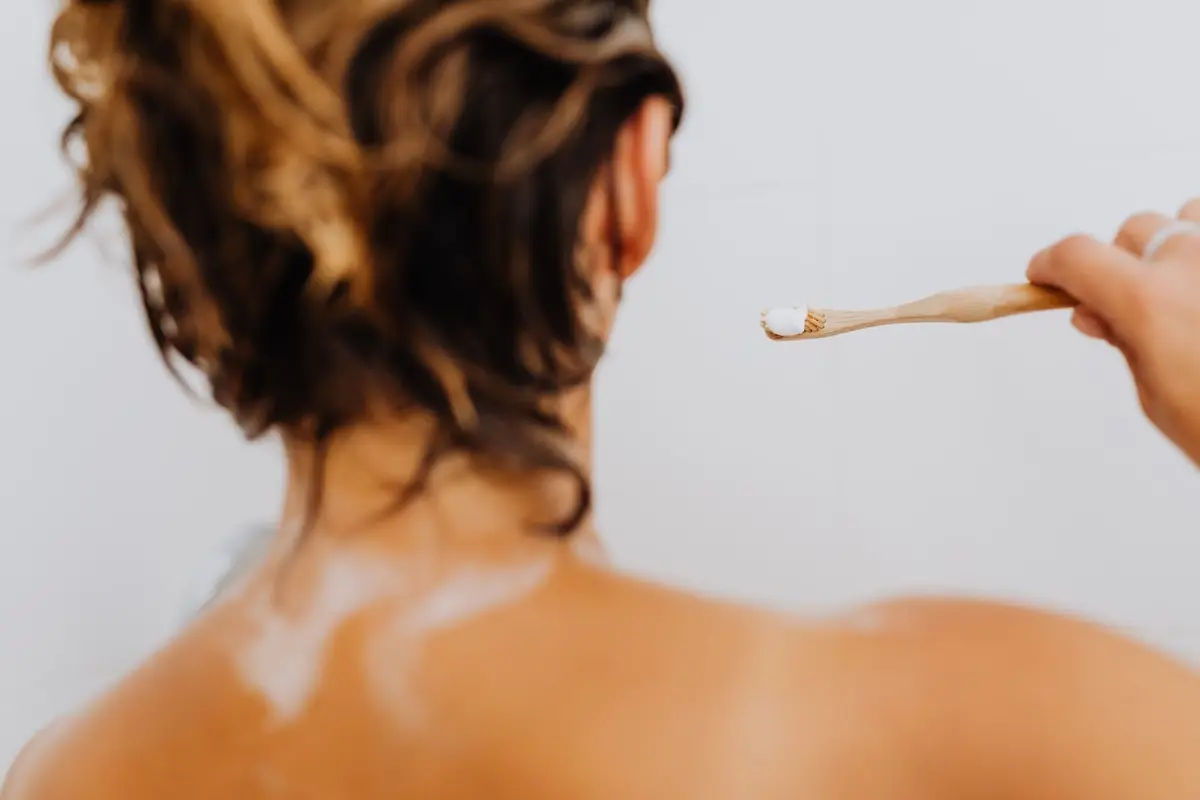
Wet brushing serves as a bridge between standard cleansing and manual exfoliation. Unlike dry brushing, which requires skin to be entirely moisture-free, wet brushing utilizes the softening effect of warm water to facilitate a gentler friction against the skin.
This method is intended to refine the surface texture of the body through controlled, rhythmic strokes. By pairing a mild shower gel with a designated brush, you ensure that the skin remains lubricated while you remove surface debris.
- Difficulty
- Beginner
- Total time
- 15 minutes
- Cost
- Low
- Cadence
- Twice weekly
Ingredients
- Glycerin: Often found in base shower gels to provide essential slip.
- Aloe leaf juice: Provides a soothing buffer during the mechanical friction of brushing.
Tools List
- Natural or synthetic bristle body brush
- Mild, non-scented shower gel
- Clean, dry towel
Step by step
Prepare the skin with warm water
Begin by rinsing your body under a warm shower for at least two minutes. Allow the water to soften the skin surface before applying any product. Do not use water that is excessively hot, as this can lead to dehydration.
Tip: Test the water temperature on your forearm first.Apply your shower gel
Apply a nickel-sized amount of a mild, non-exfoliating shower gel directly to the bristles of your brush. Distribute the product evenly by rubbing the brush against itself. You require a slip factor to prevent the bristles from dragging.
Tip: Use a gel with a neutral pH.Execute systematic strokes
Starting at the feet, use long, upward strokes toward the heart. Apply light, consistent pressure. Move systematically up the legs, across the torso, and along the arms. Keep the brush moist throughout the process by occasionally passing it under the shower stream.
Tip: Avoid joints and sensitive areas.Rinse thoroughly
Once you have covered your limbs, rinse your body with warm water to remove all traces of soap and dislodged skin cells. Ensure the brush is also rinsed until the water runs clear. Use a cool-to-lukewarm final rinse to close the experience.
Tip: Check for residual soap in the brush base.Post-shower maintenance
Immediately pat the skin dry with a clean towel. Apply a moisturizer to seal in hydration while the skin is still slightly damp. Finally, hang your brush in a well-ventilated area to dry completely before the next use.
Tip: Never leave the brush sitting in water.
Trouble
How often should I replace my brush?
A high-quality brush should be replaced every three to four months. If the bristles become frayed or flattened, the efficiency of the exfoliation will decrease significantly.
Is the bristle material important?
Natural bristles tend to offer a firmer, more structural scrub, while synthetic filaments are often softer and better suited for those with thinner skin. Choose based on your comfort level.
Why does my skin feel tight after?
Tightness suggests the water was too hot or the brush pressure was excessive. Reduce the water temperature and use a heavier moisturizer immediately after the process.
Can I use this on my back?
Yes, provided you use a long-handled brush. Do not overextend your reach, as this can cause uneven pressure distribution and potentially cause muscle strain.
Consistency in pressure is more effective than intensity of friction.
Focus on the technique rather than the intensity; the brush does the work, not your grip.