How to Corral Kids Toys
A room-by-room system for sorting, storing, and maintaining kids toys so the floor stays clear and the stuff stays accessible. Step-by-step Iris guide.
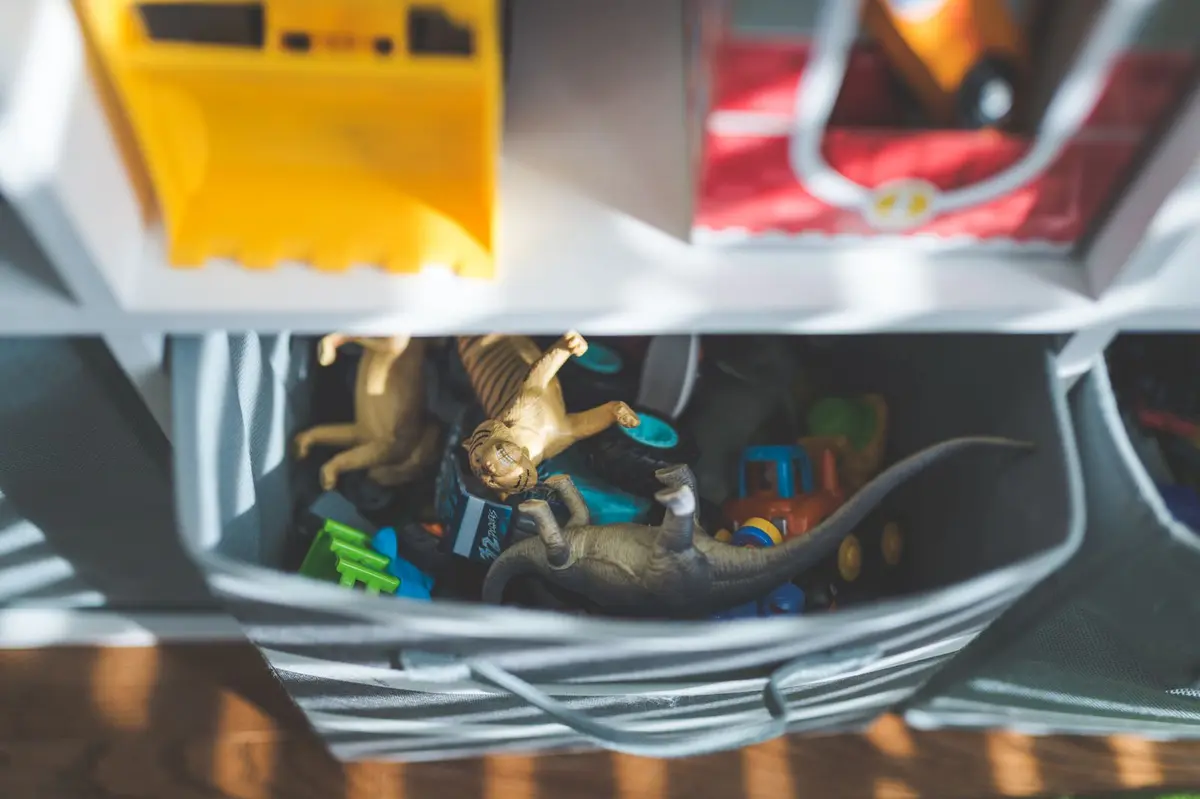
Toy chaos is a container problem, not a quantity problem. Most households already have enough storage — what's missing is the right container matched to the right category, placed at the right height for the child who uses it. This guide fixes the match and builds a daily reset routine kids can follow without adult prompting.
What You Will Need
- Open-top bins, 12–16 qt
- Shallow lidded bins, 6 qt
- Fabric cubes, 11-inch
- Over-door shoe organizer (24-pocket)
- Mesh laundry bag, 24-inch
- 3 contractor bags (trash/donate/relocate)
- Label maker or picture labels
- Zip-lock bags, 4×6 inch (for puzzles)
- Permanent marker
- Command strips or small hooks
The 8-Step System
-
01
Pull everything out first
Bring all toys from every location into one central pile before sorting anything. Include toys from the closet floor, under the bed, the living room basket, and any other room. A partial inventory produces a system with gaps. Keep three bags nearby: trash (broken or incomplete), donate (functional but no longer played with), and relocate (belongs elsewhere).
-
02
Sort by play category, not brand
Divide the pile into 6–8 categories based on how the child uses the items: building and construction, vehicles and figures, art and craft, puzzles and games, outdoor and active, plush, books. Within each category, remove broken or incomplete sets — a puzzle missing 15 pieces is trash, not a toy.
-
03
Match each category to a container type
Container must fit the category's physical properties. LEGO and small-part sets: 6-qt shallow lidded bin. Duplo and bulk blocks: 16-qt open-top bin. Stuffed animals over 12 pieces: corner cargo net or mesh hanging bag, not a standard bin. Puzzles: individual zip-lock bags, one per puzzle. Never mix small-part sets with bulk items in the same bin.
-
04
Assign locations by frequency of use
Most-used toys at child height (hip to shoulder). Rarely-used, seasonal, or fragile items on high shelves or in the closet. For closet toy storage, see How to install a closet organizer. Keep a small rotating subset visible — a child overwhelmed by options cleans up less reliably.
-
05
Label every container at child eye level
Text labels for readers; photograph labels for pre-readers (print a 2×3-inch photo of the contents, laminate, attach with velcro). Place labels on the front face, visible from the child's approach direction. Consistency of label position across all bins matters as much as the labels themselves.
-
06
Set up a child-operated daily reset
The reset must be triggered by a consistent daily cue — before dinner, before bath, before screen time — not by adult initiation. For children under six: a 5-minute visual sand timer. For children over six: a posted checklist at child height with 2–3 items per category. The goal is a system that does not require parental monitoring to operate.
-
07
Run a one-minute morning scan
One adult pass through the room each morning catches items that did not make it into bins the night before. This is not a full clean — it is a 60-second visual correction. It also catches emerging system problems: an overflowing bin means the category needs a larger container or a purge; frequent scatter in one category means the bin location or container type is wrong.
-
08
Run a quarterly reset
Children's play interests shift every 3–4 months. A 45-minute quarterly review removes unplayed toys from the active system, promotes current favorites to visible locations, and adjusts container sizes as categories grow or shrink. This prevents the two most common failures: overflowing bins and half-empty bins used as catch-alls.
Common Mistakes
- Organizing before purging. A system sized for excess will overflow immediately.
- Opaque bins without labels. Children will not open and inspect bins to find or return toys.
- Too many categories. Over 8–10 categories for one child's room is too complex to maintain reliably.
- Storing rarely-used items at child height. Prime accessible real estate is for daily-use items only.
- Skipping the daily scan. Two-day accumulation becomes a 30-minute problem rather than a 5-minute one.
- No offboarding plan. Without a donate path for outgrown toys, the active system fills with items no longer played with.
Continue in This Room
- How to install a closet organizer — single-section rod and shelf kit for bedroom closet storage
- How to install a full closet system — multi-section buildout with drawers, shelves, and shoe racks
- All Organize × Bedroom guides
- All Organize guides
- HowTo: Home Edition