How to Know When Raw Beats Slabbed
Grading does not add value — it converts an unknown into a permanent public number. The six kinds of card worth more raw, the four tells that a card is worth sending, and how to make the call in ninety seconds.

A slab cannot make a card better. It can only tell a stranger how good the card already was — and most of the cards you own will never meet that stranger. You have run the bill and you have looked at the card honestly. This is the last step of the decision: learning to say no, card by card. For almost everything in your binder, no is the right answer.
▸ THE QUICK VERSION
Grading does not add value. It converts an unknown into a fixed, public number — and that number is permanent.
Raw is the reversible state. You can always send a card later. Crack a slab and the grade stops travelling with the card — the cert number is still on file at the grader, but it no longer matches anything you hold. The trip is effectively one way.
Keep it raw when the card is played, cheap next to the bill, already flawed, already graded to death, sold face to face, or simply yours.
What a slab actually buys
THREE THINGS, NONE OF THEM VALUE
Strip away the auction-house glamour and a graded card buys exactly three things. It buys a stranger's trust at distance — a third party has examined the card so your buyer does not have to take your word for it. It buys a sealed, tamper-evident holder, which protects the card and proves nobody has swapped it. And it buys a certification number, so that one specific card can be looked up and counted in a population report.
That is the entire product. If none of those three is a problem you currently have, you are paying to solve somebody else's.
The mechanic: a grade collapses a range into a number
WHY THE LIKELIEST OUTCOME IS THE WORST ARGUMENT FOR SENDING
A raw card trades on optimism. Because nobody knows what it would grade, a buyer prices in some chance that it is excellent, and you get paid a little for that uncertainty. The instant a grade is assigned, the uncertainty is gone. The card is worth precisely what that grade is worth, to everyone, from then on.
So the real question is not "would this card grade well?" It is: where does the whole spread of outcomes land, and how much of that spread clears the bill?
▸ THE SPREAD AND THE LINE
The card sets the spread of outcomes. The bill sets the line they have to clear.
Look at what that arrangement says. The spread of outcomes belongs to the card, and it is fixed the moment you choose which card to send. The line belongs to the bill, and the bill has nothing to do with how nice the card is. On a card worth about what the submission costs, the line rides up at ×2 and only the top grade is clearly past it — the commonest outcome lands right on it, which means the whole trip was a wash and you spent weeks finding that out. On an expensive card the same line drops toward ×1 and a grade eight starts paying. Same card, same spread, opposite answer.
That is why the first thing to price is never the card on its own — it is the bill measured against the card. On the card charted here — modern, plentiful, in no danger of being faked — a seven or below lands beneath its own raw price, because a certified flaw is a flaw every future buyer can see, permanently, without ever handling the card.
That is not a law, and the exception is the one worth knowing. Go back to what a slab actually buys: a stranger's trust at distance. On modern cards the stranger's worry is condition, so certifying a poor condition costs you money. On vintage and genuinely scarce cards — the ones where counterfeits, trimmed edges and recoloured borders are a live risk — the stranger's worry is whether the card is real at all. There, a low-grade slab routinely sells at a large premium to raw, because the number is not the product; the authentication is. Ask which of the two fears your buyer has before you assume a seven is bad news. A grade eight is the ambiguous one — clearly worth more than raw on most modern cards, and just as clearly not worth the bill when the card is cheap.
Grading is not a way to make a card worth more. It is a way to find out — and to publish the answer.
Six cards that are worth more raw
THE CLEAR NOS
01
Cards you actually play withA slab does not fit in a deck. If the card has a job on the table, grading retires it from the only use that was earning you anything. Sleeve it, double-sleeve it if you are precious about it, and play.
02
Cards worth less than the billIf the submission costs more than the card is worth raw, the grade has to multiply the card several times over just to return you to zero. Most cards cannot. This is the largest category in almost every collection, by a distance.
03
Cards with a flaw you have already foundIf you spotted soft corners, a print line, or centering that is visibly off, the grader will spot it too. Sending does not launder the flaw — it certifies it, and the certificate travels with the card forever.
04
Cards from a set already graded to deathWhen tens of thousands of the same card already sit in slabs, the label is not scarce and buyers are not short of options. Read the population report before you assume a grade is worth anything at all.
05
Cards you have no intention of sellingBinder pages, the shelf, the card someone gave you. Grading is a selling tool. If the card is not going anywhere, you are buying a stranger's confidence in a transaction that will never happen.
06
Cards you will sell in personAt a shop counter or a local table the buyer can hold the card and judge it themselves. Trust is already free. A slab buys trust at a distance — pay for it only when there is distance.
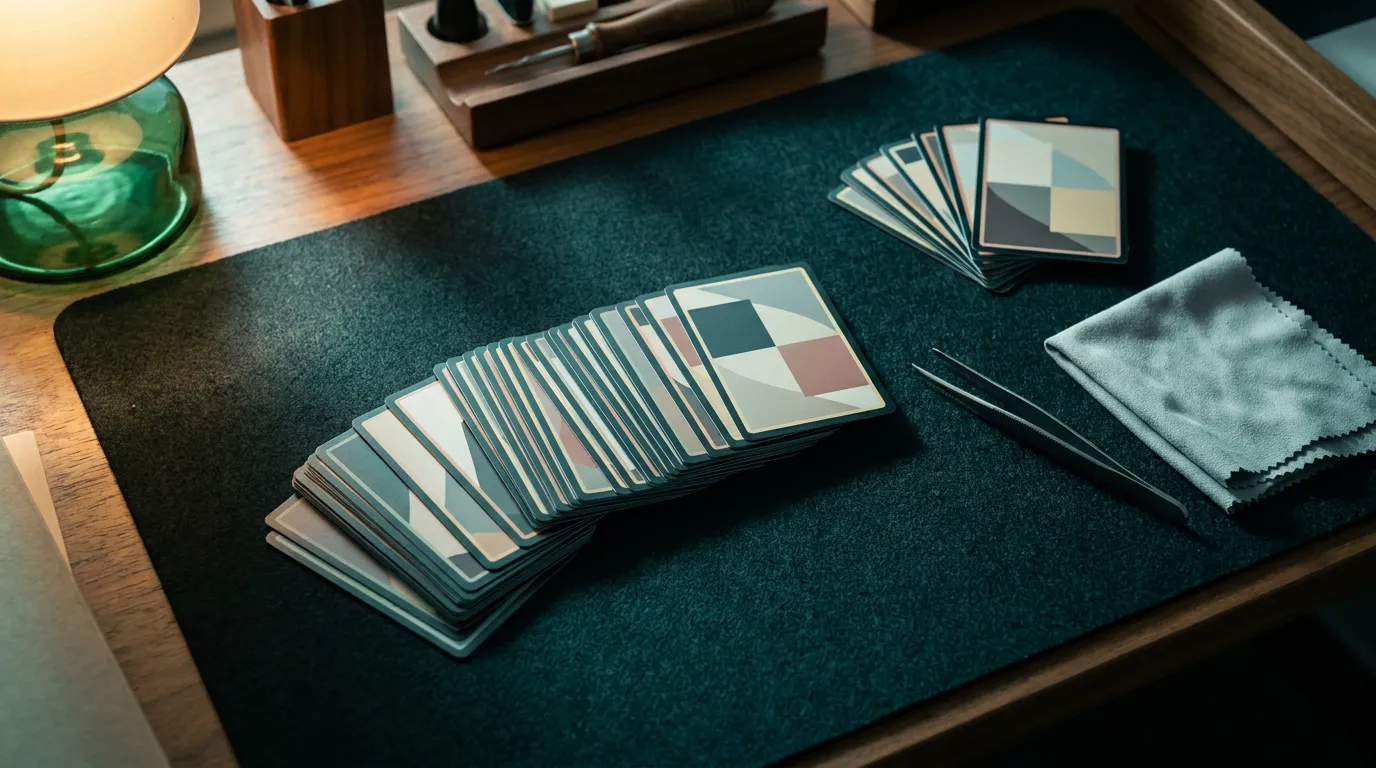
Notice what unites all six: not one of them turns on how nice the card is. A flawless card can still be a terrible submission, and that is the part people get wrong.
The four tells that a card is worth sending
THE NARROW YES
The reverse case is short, which is the honest headline of this whole chapter. A card is worth grading when all four of these are true at once — not three, not two.
01
The bill is small next to the cardWhen the submission costs a modest fraction of what the card already fetches raw, break-even sits just above ×1 and even a middling grade can clear it.
02
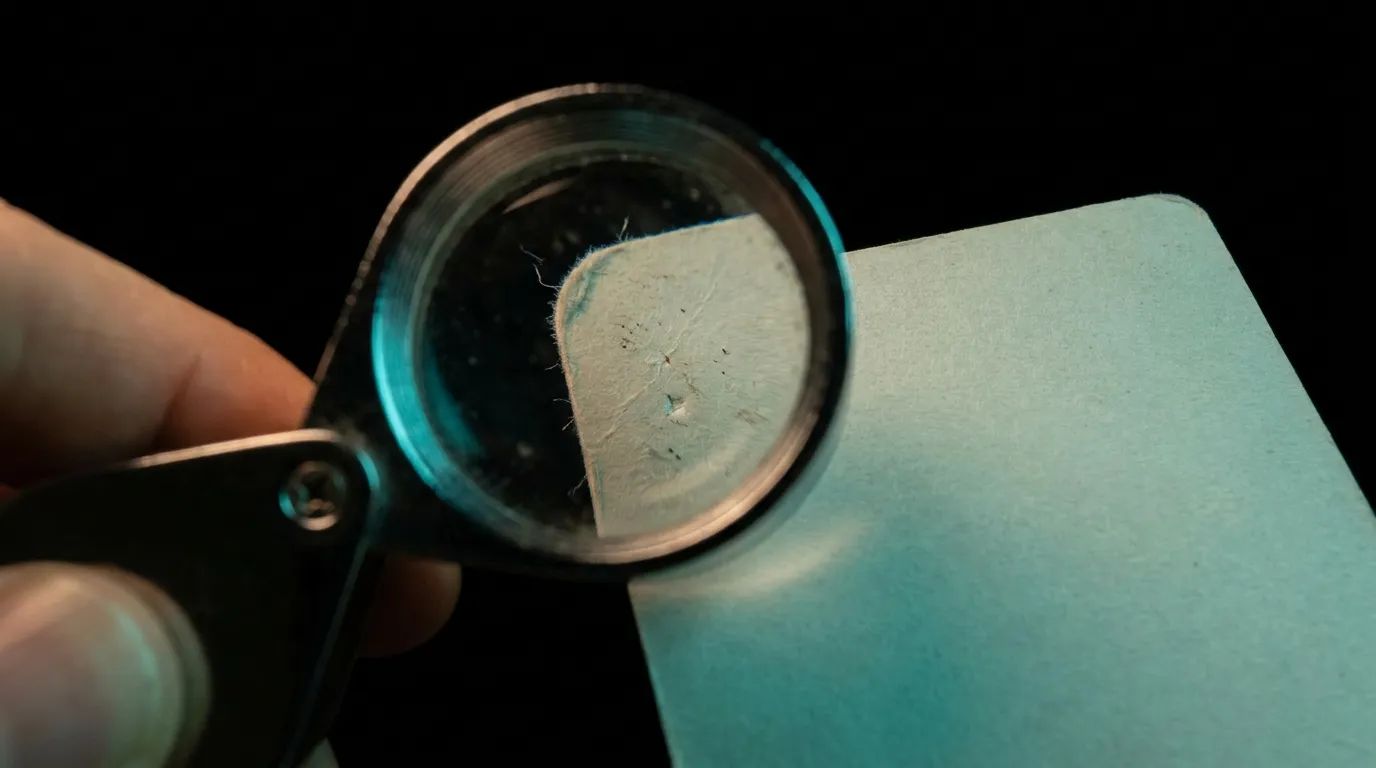
It survives a loupe on all four countsCentering, corners, edges, surface — front and back, under a bright light, at an angle. One soft corner is enough to move the likely outcome down a grade, and one grade is usually the whole margin.
03
The graded population is thin and the demand is notFew slabs plus real buyers is where a label earns money. Few slabs and no buyers just means nobody has ever thought it was worth doing.
04
Your buyer is a stranger, far awayListed online, sight unseen, at a price where somebody has to be convinced. That is the exact problem the slab was invented to solve.
Make the call in ninety seconds
THE PROCEDURE
Price it raw from sold listings
Sold, completed, actually-paid prices for the same card in the same shape — never asking prices. What people hope to get is not a number you can spend.
Add the entire bill, not the fee
Grading fee, shipping out, shipping back, insurance on both legs. Check the current figures on the grader's own site the week you plan to send: prices change, service levels open and close, and queues stretch without much warning.
Pull sold comps at two grades
The top grade and the one immediately below it. That gap is where nearly all the money in grading lives, and seeing it as two real numbers ends most arguments in about ten seconds.
Assume one grade below your hope
You are looking at your own card, in your own light, with your own optimism. Price the decision on the grade below the one you want. If it still works, it works.
Compare, and let ties go to raw
If the honest number does not clear raw-plus-bill with room to spare, keep the card. Raw is not a lesser state — it is the default, and staying there costs nothing.
▸ THE LEDGER OF THE CRACK
Break the holder and one line of seven comes home with the card.
Raw is the position of strength
WHERE THIS CHAPTER LANDS
The collectors who get this right are not the ones who grade the most. They are the ones with a very short list of cards that were ever candidates, and a binder full of everything else, sleeved properly and kept somewhere dry and dark. They still hold the whole spread of outcomes on every card in that binder, and they have not spent a cent to learn which one is true.
Grading is a tool for one job: convincing a stranger, at distance, about a card worth convincing them of. Used for that job it is excellent. Used as a default, it is an expensive way to publish bad news about cards you liked.
If you want the arithmetic behind the line on that chart, it is the first two steps of this chapter. If a card has landed in the narrow yes, the next question is who you send it to — the two routes are PSA and CGC and the other graders.