How to Pull Your Grail Without Going Broke
Grail hunting on a budget — singles-versus-packs math, two weeks of price tracking, and a rip plan that lands your chase card without wrecking rent.
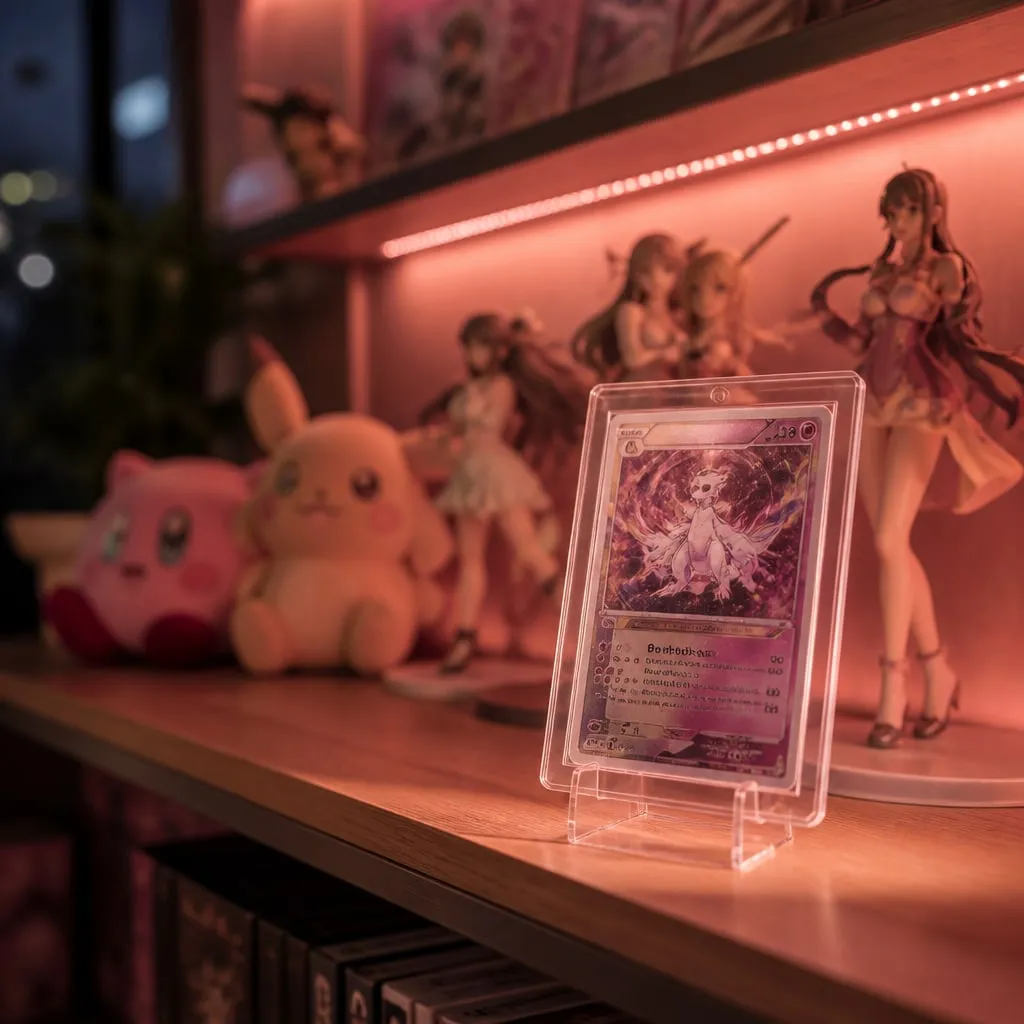
Two years on a shelf in my head, then on my actual shelf — savings intact. Here's the plan.
Everyone has that one card. Mine lived on a shelf in my head for two years before it lived on my actual shelf, and the only reason I got there with my savings intact is that I stopped treating grail hunting like a lottery and started treating it like a plan. This is the plan! It works whether your grail is a shiny dragon or a very smug little fox.
THE PLAN, IN ONE BREATH
- 01 Name your grail out loud
- 02 Set the budget first
- 03 Singles-vs-packs math
- 04 Pick your format
- 05 Track prices two weeks
- 06 Rip smart
- 07 Know when to stop
1. Name your grail out loud
"Something cool from the new set" is not a grail. A grail is one specific card: set, number, finish, the whole ID. Write it down somewhere you'll see it — mine went on a sticky note on my monitor, pink pen, non-negotiable.
This matters because vague wanting is expensive. When any hit feels like progress, you keep buying packs forever. When exactly one card counts, every purchase either moves you closer or it doesn't, and suddenly the impulse buys get very easy to skip.
2. Set a grail budget before you open anything
Decide the total number first — the most you'll spend, ever, on this one card — and keep it separate from your general fun money. I literally use a second savings pocket in my banking app labeled with the card's name. Twenty dollars a paycheck goes in, and that's the war chest.
Two rules make it work: the pocket only funds the grail, and when it's empty, the hunt pauses. Not ends — pauses! A grail you get in four months instead of four weeks is the same card, and future-you still gets to eat.
✿ TRY IT — YOUR WAR CHEST
The calm way, timed
Slide to your grail's price. $20 a paycheck, like mine — see how long the plan takes.
GRAIL PRICE $180
9 paychecks · about 4.5 months a season of patience. worth it.
3. Do the singles-versus-packs math honestly
Here's the part nobody wants to hear over the sound of crinkling foil. If your grail pulls at something like 1 in 200 packs, then at $4.50 a pack you should expect to spend around $900 in packs to hit it once. If that same card sells as a single for $180, the math is not subtle. Ripping is entertainment; the single is the acquisition.
So split your budget in your head. Some of it is rip money — you're buying the fun, the maybe, the sparkle. The rest is single money, quietly waiting. My personal split is roughly a third packs, two-thirds single fund, because I'm human and opening things is joy, but the single fund is the one that actually catches the fish.
☆ STICKY-NOTE MATH
$4.50 × ~200 packs = $900
the single = $180
…the single. obviously!!
☆ MY RATIO
a third: rip money (joy)
two-thirds: single fund (the fish)
GAS STATION TAX, DEFINED
Eight loose packs bought in moments of weakness cost more per pack than a booster box does.
4. Pick your format like it matters — because it does
Not all sealed product is equal for your specific chase. Check pull-rate write-ups for your set before you buy anything: some chase cards show up meaningfully more often in booster boxes than in the little impulse-rack blisters, and special collections sometimes have their own odds entirely. A booster box at $145 with better per-pack value usually beats eight loose packs bought in gas-station moments of weakness — the gas station tax is real.
And buy from stores that sell sealed product with a straight face. If a display looks picked over, tampered, or weirdly discounted, walk away. Weighted and resealed product is rare but it exists, and it exclusively eats budgets like yours.
5. Track prices for two full weeks
Grail prices move! New sets spike and settle, reprints crater things overnight, and tournament results can send a card climbing by Sunday. Before any big purchase, I track the price for two weeks in a plain little spreadsheet: date, lowest sold price, notes. Sold prices, not asking prices. Anyone can ask for the moon.
Two weeks of data tells you whether you're buying into a spike or a settle. Mine dropped by nearly a fifth in the eleven days I made myself wait — that paid for the celebratory dinner.
☆ FROM MY PRICE LOG
day 1: $212 (ouch)
day 11: $171 ↓ 19.3%
waiting = free dinner!!
6. Rip smart on ripping day
When you do open packs, protect the outcome. Clean dry hands, clean table, penny sleeves within reach before the first pack opens. Any hit goes straight into a sleeve, then a toploader — no passing it around the group chat table naked, no matter how loud the screaming is. Fingerprints and bent corners take real money off a card in seconds.
Pull the grail from a pack? Sleeve it, toploader it, and put it somewhere boring and safe for 24 hours before you decide anything else. Big-pull adrenaline makes terrible decisions. My friend Ian — the slab guy, he reads population reports for fun — would tell you this is the moment people ruin gem-grade cards, and he's right.
7. Know exactly when to stop
Write your stop condition next to the grail note: "when the pocket is empty, I buy the single with whatever's left plus next month's deposits." That's it. No "one more box." The entire failure mode of grail hunting is chasing losses with money that was never in the plan, and the fix is deciding the ending before the story starts.
The grail on my shelf cost me a planned amount over a planned number of months. It sparkles exactly as hard as it would have if I'd torched triple that in packs — I checked.
✿ WHAT I USED
The grail-protection shelf
Everything below has actually touched my grail. Links help fund the next one!
- Penny sleeves, 100-count — The first thing any hit touches. · ~$2
- Rigid toploaders, 35pt ×25 — Sleeve, then toploader. Always. · ~$8
- One-touch holder, 35pt — The grail earned the good house. · ~$5
- Nine-pocket binder — 360 cards. Side-loading or nothing. · ~$25
- Free spreadsheet app — Date, lowest sold, notes. · FREE
- Sticky notes + pink pen — A grail’s worth of resolve. · ~$4
SOME LINKS EARN POPPY A LITTLE COMMISSION. THE GRAIL FUND THANKS YOU.
When the grail finally lands, the grail-shelf guide gives it a bay of its own, and naming three chases a year stops the next one from becoming a monthly habit. For the sold-price homework, Ian’s two-prices method is the companion piece.
Quick answers
Is it ever smarter to buy packs than the single?
For the fun, yes; for the acquisition, almost never once a single costs less than about a quarter of the expected pack spend. The exception is brand-new sets where singles haven’t hit the market yet — and even then, waiting two weeks usually beats ripping.
How much should a grail budget be?
Whatever number you can lose entirely without changing your month, saved up over time. There’s no universal figure — the rule is that the pocket is separate, capped, and refilled on a schedule instead of on impulse.
What if my grail keeps going up while I save?
It happens, and it stings. But chasing a rising price with unplanned money is how a $180 card becomes a $600 regret. If it climbs out of your cap, either raise the cap deliberately over more months or let this one go — there will always be another card that makes your heart do the thing.
Go get your card, but let your budget hold the leash — the grail is only sweet if you're not eating instant noodles under it.
— POPPY ✿ QUEST 01 COMPLETE