Hair Elasticity: Managing Hygral Fatigue
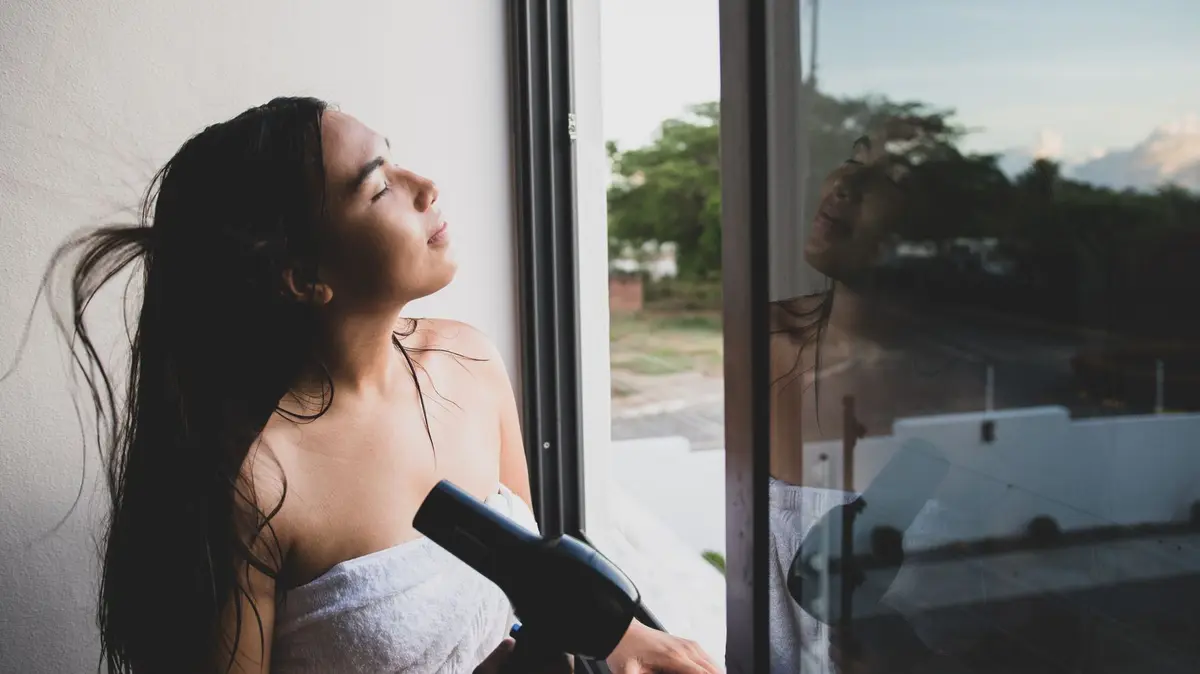
Hygral fatigue occurs when the hair fiber undergoes repeated cycles of swelling and contraction due to moisture absorption. When hair remains saturated for extended periods, the cuticle experiences stress, leading to a loss of elasticity and potential structural vulnerability. Air drying, while seemingly gentle, can keep the cortex in this swollen state for hours, which may be counterproductive for certain hair types.
Correcting your drying method is an exercise in minimizing the duration of saturation. This approach shifts the focus from passive air drying to controlled moisture removal, preserving the internal tension of the fiber.
- Difficulty
- Beginner
- Total time
- 45 minutes
- Cost
- Low
- Cadence
- Weekly
Ingredients
- Lightweight serum: Acts as a hydrophobic barrier
- Argan oil: Seals the cuticle once damp
Tools List
- Microfiber towel
- Wide-tooth comb
- Low-heat blow dryer
Step by step
Blot, do not rub
After washing, use a microfiber towel or an old cotton t-shirt to remove excess moisture. Press the fabric against the hair sections to absorb water without friction. Avoid vigorous rubbing, as this disturbs the cuticle while it is at its most vulnerable state.
Tip: Always move in a downward motion to keep the cuticle aligned.Apply moisture management
Distribute a lightweight leave-in conditioner or serum to seal the fiber. This creates a barrier that prevents the hair from absorbing excess environmental humidity while it dries. Use a wide-tooth comb to ensure even distribution from mid-lengths to ends.
Tip: Focus on the mid-lengths to avoid weighing down the roots.Low-heat extraction
Utilize a hair dryer on the lowest heat setting and medium airflow. Keep the nozzle moving continuously at least six inches away from the hair. The objective is not to style, but to expedite the transition from a saturated to a damp state.
Tip: Use a diffuser if your hair has a natural texture pattern.Final evaporation
Once the hair is approximately 80 percent dry, stop the heat application entirely. Allow the remaining moisture to evaporate naturally in a low-humidity environment. This prevents over-drying the fiber while ensuring the core is not waterlogged.
Tip: Stand in a room with good air circulation.Seal and rest
Apply a final, very light application of an oil-based sealant to the ends to lock in the final level of hydration. Avoid brushing or styling the hair while it is cooling down to prevent breakage. Allow the hair to reach room temperature before final styling.
Tip: Wait until the hair feels cool to the touch.
Trouble
What if my hair feels stiff?
Stiffness suggests you are using too much product during the sealing phase. Scale back the amount of leave-in conditioner to see if the natural flexibility returns.
Is cold air better than warm air?
Cold air is safer for the cuticle but takes longer to evaporate moisture. Use warm air for efficiency, but switch to a cool shot for the final few minutes.
Does room humidity matter?
High environmental humidity will counteract your efforts by forcing moisture back into the hair. Use a fan or a dehumidifier if your bathroom remains humid after showering.
How often should I change my drying method?
If you notice changes in your hair texture or breakage, adjust your drying time immediately. Consistency is more important than frequent switching.
The goal of drying is to minimize the time the cuticle remains in a swollen state.
Hydration is beneficial, but saturation is structural stress.