Managing the Transition: Growing Out an Undercut
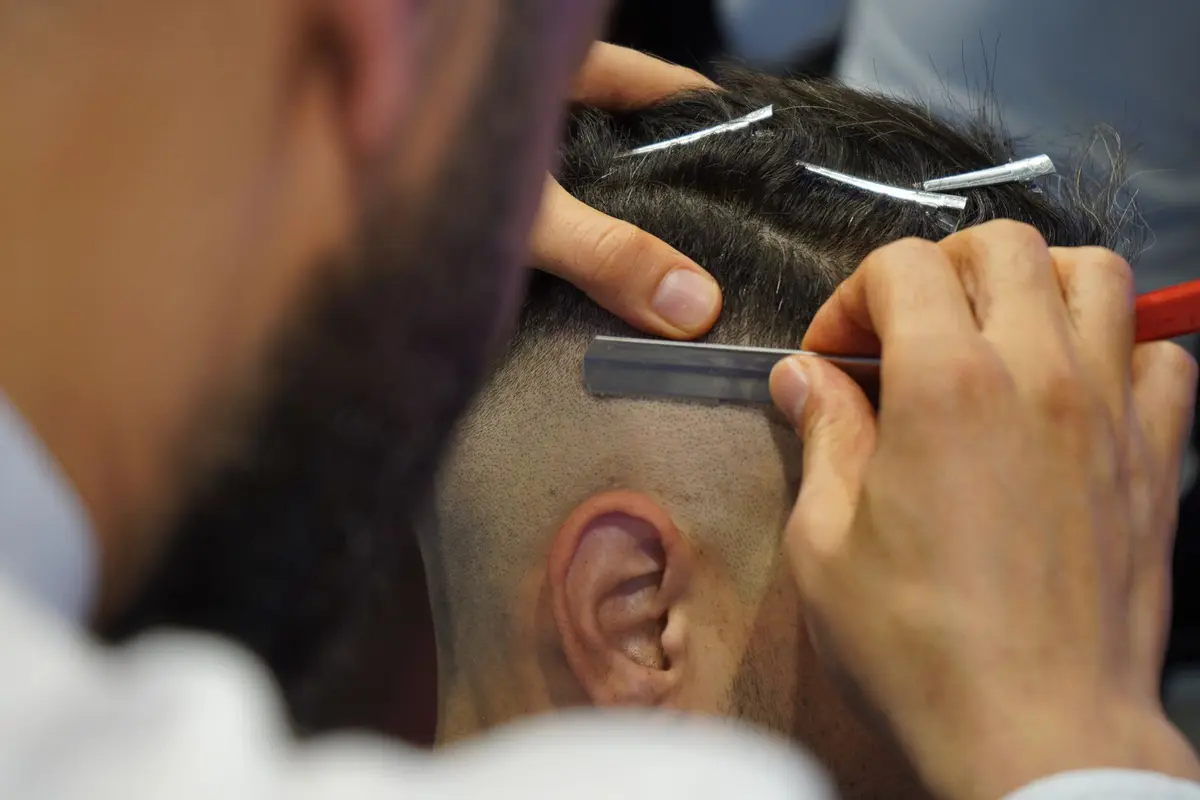
Growing out an undercut requires patience as the short section meets the length of the surrounding hair. The primary challenge involves managing the texture disparity while avoiding awkward layering. Success depends on strategic trimming rather than complete avoidance of the salon chair.
This process typically moves through three phases: the fuzzy stage, the mid-neck blend, and the final weight integration. Addressing these requires intentional styling and occasional cleanup.
- Difficulty
- Beginner
- Total time
- 6 months minimum
- Cost
- Low
- Cadence
- Trimming every six weeks
Ingredients
- Beeswax: Provides the necessary structure for smoothing flyaways.
- Kaolin clay: Absorbs oil to prevent the short regrowth from looking greasy.
Tools List
- Professional hair shears
- Texturizing shears
- Boar bristle brush
- Matte hair paste
Step by step
Manage the fuzz
Allow the initial regrowth to reach approximately one inch in length. At this point, the hair will naturally sit flat against the nape or side. Avoid using clippers to force a fade, as this resets the growth clock. Simply brush the hair downward to encourage the desired direction of growth.
Tip: Use a boar bristle brush to train the hair downward.The weight line
Once the hair reaches two inches, a noticeable weight line will form where the shorter hair meets the longer top section. Schedule a trim specifically for this edge to reduce bulk without cutting the underside length. This keeps the hair from looking mushroom-shaped.
Tip: Ask for a point-cut finish to soften the hard line.Bridge the gap
At the six-month mark, the underside will begin to blend with the shorter layers of the rest of the hair. Use a soft-hold pomade to slick the hair back, creating a unified silhouette. This hides the length disparity until the underside catches up fully.
Tip: A matte paste prevents greasy residue while holding length.Maintain the perimeter
Keep the surrounding long hair trimmed to ensure the grow-out looks intentional rather than neglected. A micro-trim of the ends prevents splitting, which can make the hair appear thinner at the site of the undercut. Focus on consistent health to minimize texture differences.
Tip: Keep the neckline clean with small, precise snips.
Trouble
Why does my hair look like a mushroom?
This occurs when the length of the undercut becomes thicker than the hair above it. Thinning the undercut section with shears will immediately alleviate the excess bulk.
Should I cut the rest of my hair to match?
Cutting the top hair shorter creates a uniform look but extends the time needed for the entire head to reach a longer length. It is usually more efficient to keep the long hair intact.
Can I use hair extensions to hide it?
Extensions are effective but require professional application to ensure they do not pull on the fragile new growth. Avoid DIY kits.
How do I stop the short hairs from sticking out?
Use a light-hold gel and a fine-tooth comb to press the hairs flat against the scalp while damp. This creates a temporary, sleek appearance.
Patience is a technical requirement, not a suggestion.
The aesthetic objective is uniformity, which is achieved through selective weight removal.