When to Clarify on a Sulphate-Free Routine
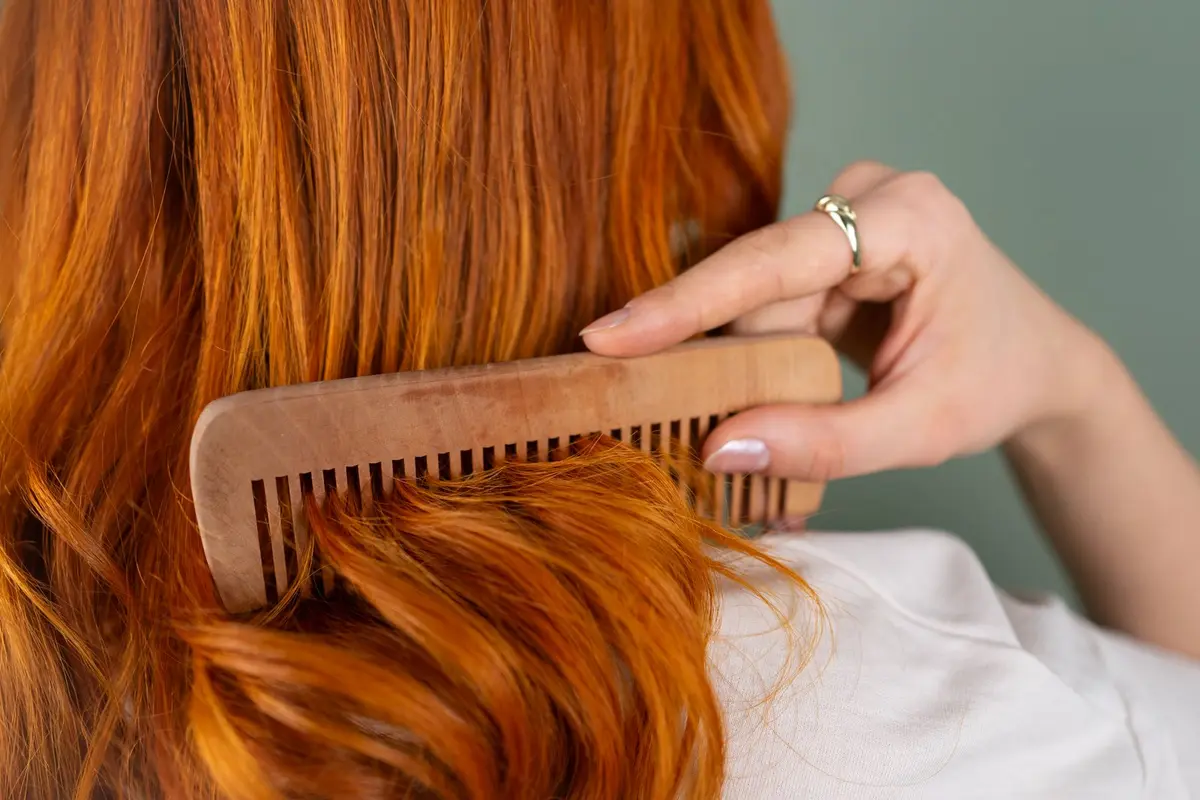
Adopting a sulphate-free routine is an effective method for preserving the vibrancy of artificial hair colour. However, these milder cleansing agents often lack the surfactant strength required to dissolve heavy silicones, mineral deposits, or excess styling products.
Over time, this accumulation manifests as hair that feels dull, heavy, or resistant to moisture. Introducing a clarifying session into your schedule prevents this buildup without undoing the work of your standard colour-safe products.
- Difficulty
- Beginner
- Total time
- 20 minutes
- Cost
- Low
- Cadence
- Once every three to four weeks
Ingredients
- Cocamidopropyl Betaine: A gentle surfactant that cleanses without stripping colour.
Tools List
- Sulphate-free clarifying cleanser
Step by step
Prepare the scalp and lengths
Begin by saturating your hair with warm, not hot, water. Ensure the hair is dripping wet from root to tip, as this provides a buffer for the clarifying agent. Apply a nickel-sized amount of your chosen cleanser, focusing primarily on the scalp where most buildup originates.
Tip: Apply the product to your hands first to ensure even distribution.Massage with precision
Use your fingertips, not your fingernails, to massage the scalp in circular motions. Avoid piling the hair on top of your head, which leads to unnecessary tangling. Allow the lather to work through the lengths of your hair only during the final thirty seconds of the massage.
Tip: Keep the motion gentle to prevent cuticle abrasion.Rinse thoroughly
Rinse your hair under a steady stream of water for at least two minutes. Use your fingers to lift sections of hair to ensure that no cleanser remains trapped near the nape of the neck. Residual product can lead to irritation and lack of shine.
Tip: If the water runs clear immediately, keep rinsing for another thirty seconds.Restore hydration
Clarifying removes surface impurities along with some natural oils, so immediate rehydration is required. Apply a colour-safe, moisture-dense conditioner from the mid-lengths to the ends. Let the product sit for the duration specified on the packaging before rinsing with cool water to seal the cuticle.
Tip: Use a wide-tooth comb to distribute conditioner evenly.
Trouble
How often should I clarify?
For most hair types, once every three to four weeks is sufficient. If you use heavy styling pomades or reside in an area with hard water, you may need to increase this frequency to every two weeks.
Will this strip my toner?
A gentle clarifying shampoo should not lift significant colour. If you notice your tone shifting dramatically, you are likely using a product with a pH that is too high; consider a lower pH clarifying option.
Can I use a chelating shampoo instead?
Chelating shampoos are specifically designed for mineral buildup from hard water. If your hair feels stiff and does not lather, a chelating formula is preferable to a standard clarifying one.
Does my hair need to feel squeaky clean?
No. That sensation indicates that the cuticle has been stripped of essential protective lipids. Your hair should feel clean and supple, not dry or friction-heavy.
Clarifying is not a punishment for your hair, but a necessary reset button.
Consistency is superior to intensity when managing coloured hair.