A Routine for High-Gloss Dark Hair
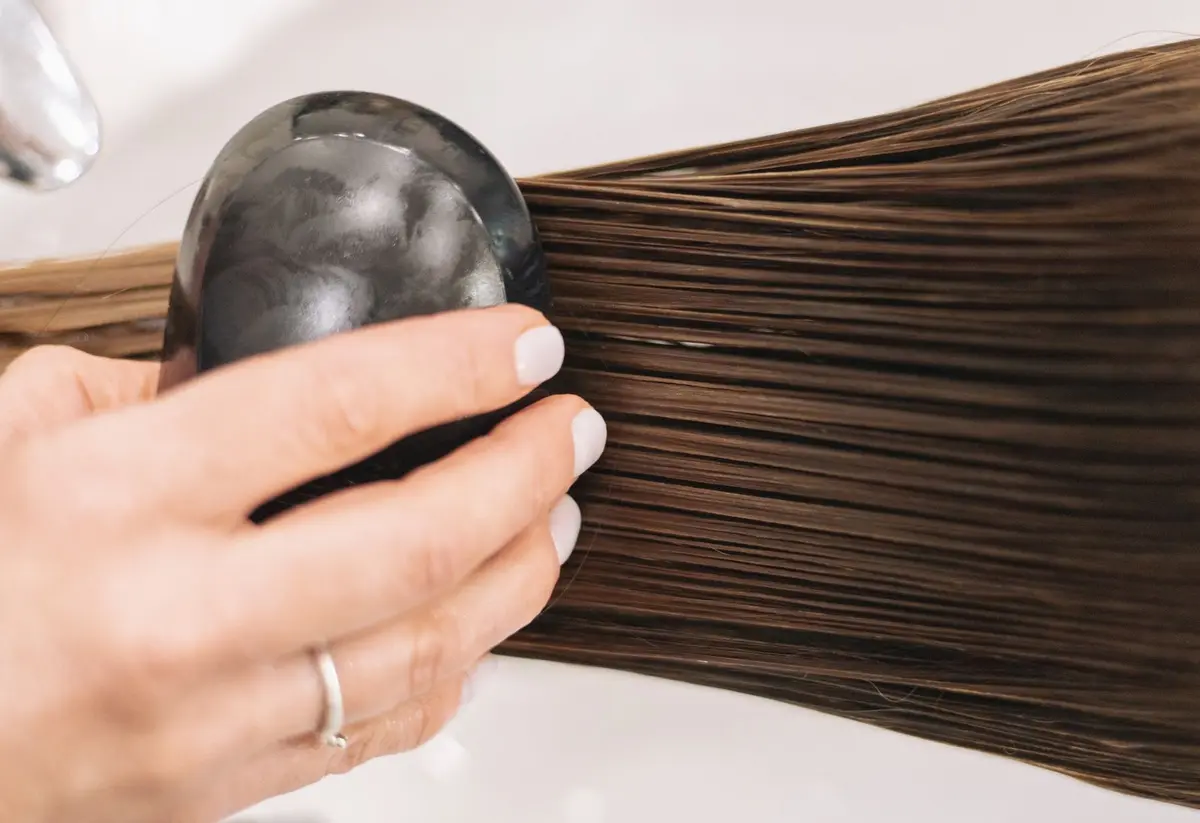
Dark hair loses its visual depth when the cuticle becomes frayed or covered in dulling residue. Expensive-looking dark hair is defined by surface smoothness rather than color intensity alone, as light must bounce off the strand to create a glossy effect. Achieving this requires a pivot from heavy styling products to a ritual centered on cuticle alignment and deep hydration.
The process relies on consistent mechanical smoothing and the removal of opaque mineral deposits. Follow these steps to improve light refraction on your natural or tinted dark hair.
- Difficulty
- Beginner
- Total time
- 45 minutes
- Cost
- Moderate
- Cadence
- Weekly
Ingredients
- Argan oil: Provides a thin, non-heavy reflective layer.
- Chelating agents: Removes metal ions left by hard water.
Tools List
- Clarifying shampoo
- Deep conditioning mask
- Microfiber towel
- Boar bristle brush
- Lightweight finishing oil
Step by step
Remove mineral buildup
Use a clarifying rinse or a chelating shampoo to strip away hard water minerals and styling product residue. This is essential, as residue dulls the hair and prevents light reflection. Massage the scalp thoroughly but focus the product on the mid-lengths where accumulation occurs most frequently. Rinse with cool water to encourage the cuticle to lie flat.
Tip: Always follow a clarifying wash with a hydrating mask.Deep condition the cuticle
Apply a moisture-rich hair mask starting two inches from the roots. Use a wide-tooth comb to distribute the product evenly through the ends. Cover with a warm towel to allow the ingredients to penetrate the strand effectively. Rinse thoroughly, ensuring no slickness remains, which would otherwise weigh down the hair once dry.
Tip: Use a wooden comb to prevent static friction.Seal with a cold water rinse
Finish every wash with a final rinse using the coldest water you can tolerate for 30 seconds. Cold temperatures assist in contracting the hair cuticle, making the surface smoother and more reflective. Avoid hot water during this phase as it expands the hair shaft and increases porosity.
Tip: Keep the spray on the mid-lengths and ends only.Smooth with boar bristle
Gently towel-dry your hair by pressing, not rubbing, the moisture out with a microfiber towel. Apply a small amount of shine-enhancing serum to your palms and work it through the damp ends. Blow-dry the hair in a downward motion using a boar bristle brush to physically align the cuticles as they dry.
Tip: Point the dryer nozzle downward to direct airflow along the cuticle.Refine the surface
Once the hair is completely cool to the touch, apply a light finishing oil. Rub two drops between your fingertips and smooth them only over the outermost surface of your hair. This final layer acts as a reflective topcoat, concealing minor frizz and providing a polished finish that mimics a professional blowout.
Tip: Less is more; too much oil will make dark hair appear greasy.
Trouble
My hair feels greasy after finishing.
You are likely using too much product. Reduce the finishing oil to a single drop and ensure it is emulsified in your palms before applying.
The shine disappears after one day.
Environmental factors such as wind or friction can disrupt the cuticle. Try using a silk pillowcase to maintain smoothness while sleeping.
My ends remain dry despite masking.
The ends of long hair are often porous. You may need a specialized leave-in conditioner applied to the ends before drying.
Is the cold rinse necessary?
Yes, temperature has a mechanical effect on the cuticle. Cold water helps keep the surface flat, which is the primary requirement for light reflection.
Gloss is the result of surface alignment; the smoother the hair, the brighter the shine.
The goal is reflection, not buildup. Keep the products light.
Keep that mirror-like shine going between colour appointments: see how the temperature of your rinse water affects gloss longevity, borrow a slow, unhurried weekly ritual from Sunday: the only day with a routine, and if you are moving to a deep brunette from lighter pieces, read highlights to dark without the muddy cast before you book your next appointment or buy your next box of colour. Read them in whichever order suits you: the gloss and highlights pages both sit in our colour and treatment library, and the weekly ritual piece is a slower, more personal read.