Temperature Control for Gloss Longevity
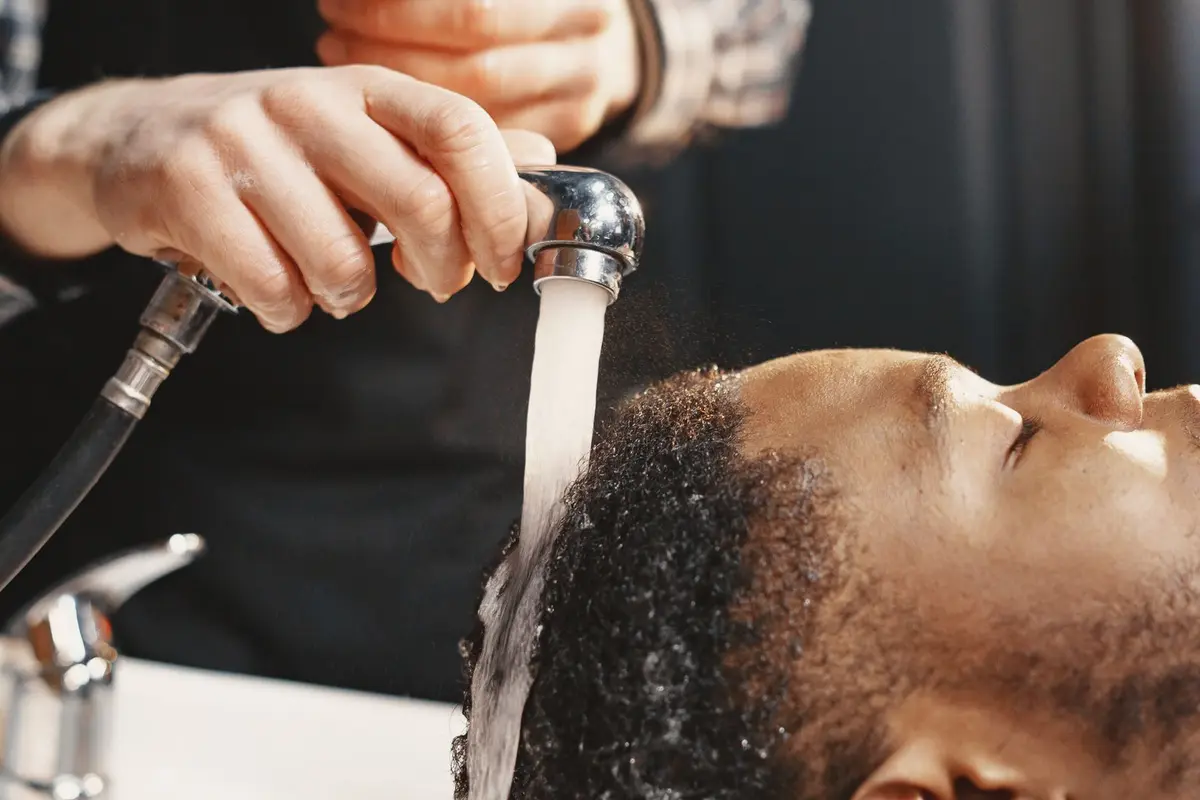
A hair gloss functions by smoothing the hair shaft to reflect light, a process that is highly sensitive to the structural changes triggered by water temperature. High heat facilitates the expansion of the hair cuticle, which allows for the rapid leaching of color molecules and reflective polymers.
By systematically adjusting your water temperature throughout the wash process, you reinforce the closure of the cuticle layer. This manual regulation acts as a mechanical barrier against premature fading.
The process requires intentionality during each stage of the wash, specifically distinguishing between the requirements of cleansing and the requirements of final sealing.
- Difficulty
- Beginner
- Total time
- 10 minutes per wash
- Cost
- Zero investment
- Cadence
- Every wash cycle
Ingredients
- Distilled water: Low mineral content assists in reducing cuticle irritation
Tools List
- Handheld shower head with temperature control
Step by step
Initiate with moderate warmth
Begin the wetting process with lukewarm water, specifically targeting the scalp to facilitate gentle cleansing. Avoid scalding temperatures, as heat sensitivity begins the moment the gloss-treated hair is saturated. Focus the water stream primarily on the roots to maintain the saturation point on the lengths.
Tip: Use your wrist to gauge the temperature before applying to the hair.Perform a low-friction cleanse
Apply your cleanser only to the scalp, keeping the hair lengths in a downward orientation to minimize agitation. Rinse the cleanser out using the same lukewarm temperature used in step one. Do not allow the water to reach a high-heat threshold, even if you are accustomed to warmer showers for bodily comfort.
Tip: Avoid gathering hair on top of the head to prevent unnecessary friction.Apply conditioner with intent
Distribute your conditioner or sealing agent from mid-lengths to ends using a wide-tooth comb. Ensure every strand is coated thoroughly while the cuticle is slightly receptive. Let the product sit for the duration specified by the manufacturer, ensuring the hair remains undisturbed.
Tip: Apply to squeezed-out hair to prevent dilution.Execute the cool-down phase
Transition the water temperature to a cold setting, ensuring it is cool to the touch but not freezing. Use this stream to rinse the conditioner from your hair, starting at the scalp and moving downward. The cooling effect forces the cuticle to flatten and lock in the conditioning agents and the gloss finish.
Tip: Keep the spray focused downward to keep the hair flat.Finalize and secure
Perform a final pass of cold water to confirm all product residue is removed and the cuticle is fully sealed. Once the hair feels sleek and smooth to the touch, terminate the water flow. Wrap the hair gently in a microfiber towel to absorb moisture without rubbing.
Tip: Press the hair to remove moisture instead of twisting.
Trouble
Can I use warm water for the whole wash?
No. Warm water causes the cuticle to remain open, which allows the gloss components to escape prematurely. A final cool rinse is required for maximum longevity.
How cold should the water be?
The water should be cool enough to cause a physiological reaction in your skin, typically around 65-70 degrees Fahrenheit. It does not need to be ice cold to be effective.
Does this replace the need for professional maintenance?
This technique manages the physical state of the cuticle but does not add pigment or structural reinforcement. It is a maintenance tool for your home routine.
Is the cool rinse harmful to the scalp?
A cool rinse is generally well-tolerated by the scalp. If you experience discomfort, limit the cool water stream specifically to the mid-lengths and ends of the hair.
A cool rinse is the mechanical anchor that secures a gloss.
Consistency in water temperature is a neglected variable in home maintenance.
More colour care: gloss, colour fade and a sulphate-free routine.