How to Plan a Two-Week Trip from Scratch
Start with your dates and budget, pick 2-3 destinations that connect logically, book flights first, then accommodation, then fill in the rest. Two weeks is enough for one country well or two countries if they're neighbors.
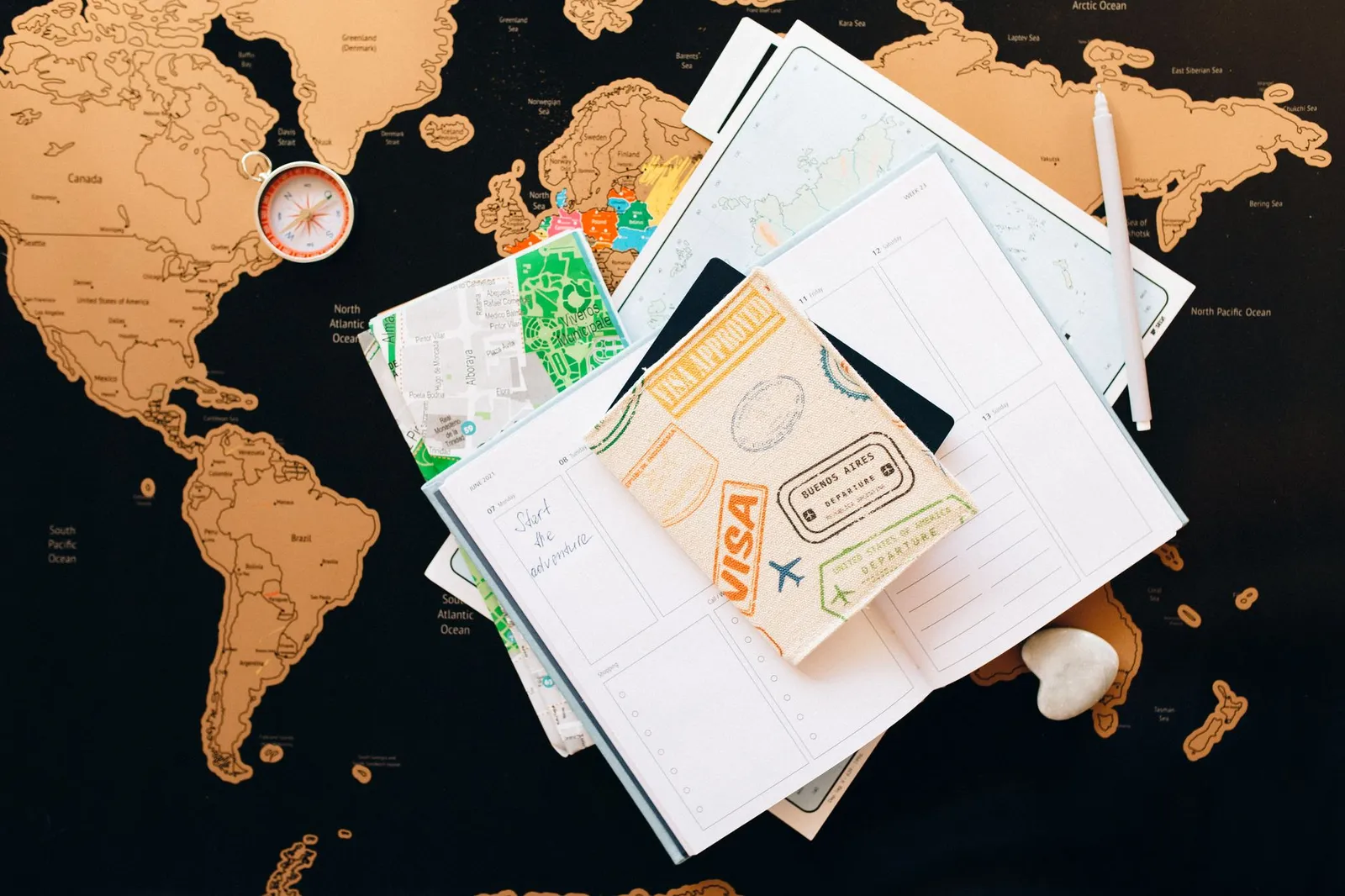
Start with your dates and budget, pick 2-3 destinations that connect logically, book flights first, then accommodation, then fill in the rest. Two weeks is enough for one country well or two countries if they're neighbors.
At a glance
- Budget
- 1200-1800 USD total including flights, or 80-120 USD per day on the ground
- Duration
- 14 days recommended, minimum 10 days to make flying worth it
- Best Time
- May-June or September-October—warm, not crowded, shoulder prices
- Visa Required
- Depends on citizenship; most Western travelers need nothing for EU
Step by step
Lock in your dates and budget
Pick your start and end dates first—this drives everything else. Then decide your total budget and divide it by 14 days to get your daily spend target. Don't forget to account for flights separately from daily costs. Write these numbers down. You'll reference them constantly.
Choose your destination or destinations
Two weeks is sweet spot for depth over breadth. Pick one country and explore it well, or pick two neighboring countries (like Spain + Portugal, or France + Belgium). Avoid the impulse to do 4 countries in 14 days—you'll spend half your time on trains and ferries. Look at a map. Draw a line. Everything should be on or near that line.
Map your route
Decide which city you'll land in and which city you'll leave from—they don't have to be the same. List 2-4 stops between them in the order you'll visit. For two weeks, aim for 4 cities maximum, 2-4 days in each. Write down the travel time between them (train, bus, flight, or car). This becomes your backbone.
Book your flights
Book your international flights first while you have this timeline solid. One-way is often cheaper than round-trip if your return city is different. Set up price alerts 3 months out, check on Tuesday/Wednesday mornings, and book when you find something within 20% of the cheapest price you've seen. Don't wait for perfection.
Book accommodation
With flight dates locked, book your accommodations in reverse order—furthest city first. This avoids cascading changes. Book for the nights you'll be in each city, not the number of days. If you arrive Tuesday afternoon and leave Friday morning, that's 2 nights. Use Booking.com, Airbnb, or Hotels.com. Read reviews focused on noise, WiFi, and location (walking distance matters). Budget 40-70 USD per night for decent mid-range hotels in Western Europe.
Plan your movement between cities
Figure out exactly how you'll get from city to city. Train is usually cheapest and easiest in Europe. Book Eurail passes only if you're doing 4+ train journeys—otherwise buy point-to-point tickets. Bus is slower but cheaper. Check Flixbus and national rail sites (SNCF for France, Trenitalia for Italy, Renfe for Spain). Book 2-3 weeks ahead for better prices. Write down times and confirmation numbers.
Research what to do and see
Spend 30 minutes per destination on Google Maps and a guidebook (Lonely Planet online or Rick Steves). Mark 3-5 things you actually want to do in each city—not everything. Overplanning kills the trip. Leave half your day unstructured. Museum opening hours matter; check them. Skip major sites that require advance booking unless they're must-dos.
Sort out visas and documents
Check entry requirements for every country you're visiting. If you're a US/Canada/UK citizen visiting EU countries, you likely need nothing. If you need a visa, apply 6-8 weeks before you go. Get travel insurance that covers theft and medical emergencies—40-60 USD for two weeks is standard. Take a photo of your passport and email it to yourself.
Build a lightweight packing list
You don't need much. Aim for a carry-on only if possible. Pack for the weather in your latest destination and bring one warm layer. You'll have laundry access in every city. Write it down. Don't overpack—every experienced traveler tells you this. Lightweight beats everything.
Create a simple one-page timeline
Write one document with every confirmation number, every date, every address. Flights, hotels, train bookings, insurance policy, emergency contacts. Take a screenshot and save it offline. Share it with someone at home. You'll reference this constantly, and you'll sleep better knowing it exists.
Budget
| Accommodation | 40-70 USD per night (Western Europe mid-range) |
| Two Week Total | 1200-1800 USD including flights for budget to mid-range travelers |
| Food And Drinks | 25-40 USD per day (cooking some meals, eating street food) |
| Trains And Transport | 200-400 USD total for 2-3 city-to-city journeys |
| Flights International | 300-600 USD depending on origin and destination |
| Attractions And Activities | 50-100 USD total for two weeks (many museums free or cheap) |
What to bring
- One lightweight bag that fits overhead bins—no checked luggage needed
- [Comfortable walking shoes](/go/zoe-walking-shoes) already broken in—you'll be walking 15,000+ steps per day
- Universal power adapter and one charging cable—European outlets vary by country
- One nice outfit for restaurants and museums—dark jeans and a button-up cover everything
- Lightweight [rain jacket](/go/zoe-rain-jacket) that packs to the size of a soda can—weather changes fast in Europe
Visa & entry notes
US, Canadian, UK, and Australian citizens don't need visas for EU countries and can stay up to 90 days in any 180-day period. Passports must be valid for at least 6 months beyond your travel dates. Check your specific citizenship against the European Commission website if you're from outside these countries. Travel insurance is not required legally but is strongly recommended—it's cheap and covers theft, lost luggage, and medical emergencies. Get it before you book anything else.
FAQ
How many cities should I visit in 14 days?
2-4 cities maximum. Two weeks broken into 4 stops means 3-4 days per city, which is enough to see the main sights, eat well, and actually rest. More than 4 cities means you'll spend your time on trains instead of actually being places.
Should I get a Eurail Pass?
Only if you're taking 4 or more long-distance trains. A 14-day pass costs 400-500 USD and is most useful for people doing a lot of rail travel. If you're just connecting 2-3 cities, buy point-to-point tickets—much cheaper. Calculate both options before committing.
What if my dates shift after I book?
This happens. Book refundable flights if you can, even if they're slightly more expensive. Most hotels let you cancel free up to 7-14 days before arrival. Trains usually allow changes for a fee. Build in 1-2 extra days as buffer time if your budget allows.
Do I need to book everything in advance?
Flights and accommodation should be booked 1-3 months ahead for better prices. Train tickets can be booked 2-3 weeks ahead. Individual attractions and restaurants rarely need advance booking except for popular sites (Vatican Museums, Sagrada Familia, Anne Frank House). Don't over-book your days—spontaneity matters.
Should I fly between cities or take trains?
Trains are cheaper, easier, and deposit you in city centers. Flights are faster but require going to airports outside cities and arrive 1-2 hours before departure. For distances under 6 hours, take the train. Longer distances, evaluate prices—sometimes a flight is comparable after you factor in ground transport.
How much money should I actually carry?
Carry 200-300 USD worth of local currency and use ATMs for the rest. Credit cards work almost everywhere in Europe. Notify your bank you're traveling so they don't block your card. Carry two payment methods in case one fails.
Is two weeks enough to enjoy a trip or just enough to see things?
Two weeks is enough to enjoy it if you pick 2-3 destinations. One country, 4 cities, 3-4 days each—you'll see the main sights and have time to walk around, eat, sit in cafes, and talk to people. The trap is trying to do too much. Slow down intentionally.
Several of the steps above have their own guides: what actually moves a hotel price covers when to book the rooms, packing for two weeks in a carry-on covers the bag, and September beats July explains the shoulder-season dates suggested at the top of this page. For a more personal take on the same question, see Zoe's journal essay on planning two weeks around a single anchor.
See also
- How to book cheap flights to Europe
- How to pack carry-on only for two weeks
- What are the entry requirements for Europe by citizenship
See HowTo: Food Edition at HowTo Food for guides on eating in specific European cities. We have detailed breakdowns for Rome, Paris, Barcelona, Berlin, and more.