The Andes by Bus. Lima to La Paz, slowly.
Why the overland Lima–Cusco–Puno–La Paz bus route beats flying: Cruz del Sur sleepers, pacing the altitude, what it costs and what each leg gives you.
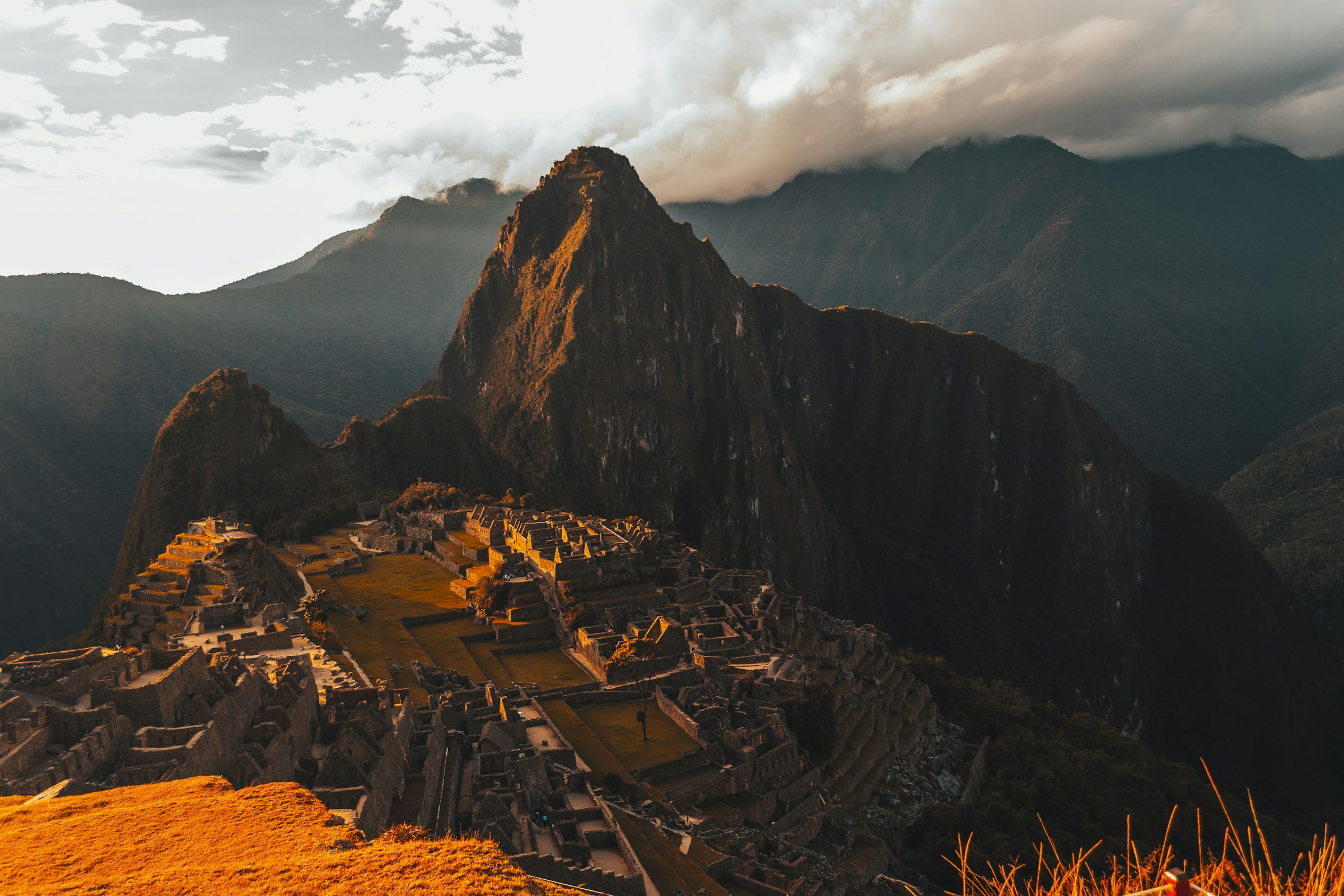
By Juan Reyes, Bogotá. The flight from Lima to La Paz takes four hours and skips everything that makes the trip worth taking. The bus takes fourteen days and is the trip. Cruz del Sur sleepers, the Arequipa altitude break, the Sacred Valley out the window, the Cusco-Puno altiplano, the Lake Titicaca crossing into Bolivia. Six hundred dollars in buses and lodging versus fourteen hundred in flights, with the views the brochures cannot reproduce thrown in for free. Here is how to do it without breaking yourself on the altitude.
- 12–16 day overland window
- Best May through September (dry season)
- Budget from $1,400 per person all-in with Machu Picchu
- Cruz del Sur Cruzero Suite for the long legs
- Updated May 2026 by Juan Reyes
The short answer.
Lima 2 nights, Arequipa 2 nights, Cusco 4 nights with Sacred Valley and Machu Picchu, Puno 2 nights on Lake Titicaca, La Paz 3 nights. Cruz del Sur Cruzero Suite for the overnight legs (Lima–Arequipa, Arequipa–Cusco). Daytime bus for Cusco–Puno because the altiplano view is the point. Bolivia Hop or Cruz del Sur for Puno–La Paz via Yunguyo–Copacabana. Start at sea level, ascend gradually, never reverse the direction. Total bus cost: about $180. Total trip with mid-range lodging: about $1,400 versus $2,400 for the flight version.
Why the bus, and why slowly.
When I first crossed the Andes overland — Bogotá to Quito to Lima to Cusco, twenty-some years ago, in the slow way — I expected the long bus rides to be the cost of the trip. They were the trip. The Lima–Arequipa coastal road runs along desert cliffs over the Pacific. The Arequipa–Cusco overnight climbs through villages where the only light at 3 am is a single bulb in a doorway and a man selling coca tea from a thermos. The Cusco–Puno daytime crosses the altiplano at 4,300 meters with vicuñas grazing in fields the color of beaten brass. The Puno–La Paz leg drops you into Lake Titicaca's southern shore. None of that is visible from a plane.
The argument for the bus is not nostalgia. It is that the landscape between the cities is the reason to come to the Andes, and the bus is the only way to see it without renting a 4×4 and driving yourself across borders, which is a bad idea for reasons that fill their own article. A Cruz del Sur Cruzero Suite seat reclines flat. The bus has a bathroom. There is dinner served on the long legs. You sleep, you wake up at sunrise on the altiplano, you sleep again. The flight version of this trip costs $1,400 in airfare alone and shows you nothing.
Cruz del Sur, plain.
Cruz del Sur is the only first-tier line worth booking for the long Peruvian legs. The Cruzero Suite tier — front of the bus, lower deck, four seats per row that fold flat — runs about 280 soles for Lima–Arequipa and 240 for Arequipa–Cusco. That is roughly $75 and $65 in 2026. Cheaper lines (Tepsa, Excluciva, Oltursa) are 30–40% cheaper and the seats are fine for daytime; for overnight, the difference is the difference between sleeping and not sleeping. Bolivia Hop, the gringo-targeted Puno–La Paz operator, is about $35 for the through-service including border handling. Worth it for first-timers.
Book Cruz del Sur online at cruzdelsur.com.pe with a credit card. Print the ticket and bring your passport — both are checked at boarding. They scan luggage, photograph passengers, run two drivers in shifts.
The altitude. Start at sea level. Ascend.
The whole trip works because of one rule: start at sea level and ascend gradually. Lima at sea level. Two nights. Bus to Arequipa at 2,335 meters — two more nights, the legitimate altitude break, where you walk the white volcanic colonial center and eat rocoto relleno at a restaurant in Yanahuara. Bus to Cusco at 3,400 meters. Coca tea on arrival, light dinner first night, no alcohol for 24 hours. By the third day in Cusco you are functioning. Train to Aguas Calientes (drops to 2,040 m — the altitude break is built into the Machu Picchu visit), then back up to Cusco. Bus to Puno at 3,830 meters. By Puno you are acclimated. La Paz at 3,640 m feels easier than Puno did.
Reverse this — fly into La Paz from sea level — and you will spend two days in bed. I have seen it in friends. La Paz's airport is at El Alto, 4,150 meters, and walking from the plane to the taxi is the test. Do not start at La Paz coming from sea level. The bus from Lima is the only sane way in.
The border at Copacabana.
Two land crossings work between Peru and Bolivia. Desaguadero is direct and fast — three hours, no scenery, used by trucks. Yunguyo–Copacabana is the better route. The bus stops at Yunguyo on the Peruvian side, everyone gets off with their luggage, walks across with passports, gets exit and entry stamps at two small border posts a hundred meters apart, reboards. Forty-five to ninety minutes total. US passport holders pay no fee. Bolivia Hop services let you break the journey at Copacabana for a night — the town sits on Lake Titicaca's Bolivian shore, and from there boats run to Isla del Sol, where the sunset on the lake from a hilltop hostel is one of the cheap miracles of South American travel.
The cost framework.
Fourteen days from Lima to La Paz, mid-range, breaks down like this. Buses: $180 (Lima–Arequipa $75, Arequipa–Cusco $65, Cusco–Puno $25, Puno–La Paz $35, plus the Sacred Valley and local segments). Lodging: $35–60 a night × 13 nights = $560. Food: $20 a day × 14 = $280. Machu Picchu: about $260 (PeruRail Vistadome round-trip, the entry ticket and a night in Aguas Calientes). Activities and entries: $80. Tips and buffer: $40. Total: about $1,400 per person.
Compare the flight version. Lima to Cusco one-way: $180. Cusco to La Paz with the necessary connection: $350. Plus the same lodging, food, and Machu Picchu. Plus the altitude penalty of arriving at 3,400 m from sea level on a 90-minute flight. Total: $2,400 with worse acclimation and none of the views. The bus is not the budget option. It is the better option that happens to cost less.
Here is the reframe. The financial argument for the bus is the easy one, and it makes the trip 40% cheaper. But the argument that matters is the other one: the $800 you save buys an extra week in Bolivia or three more nights in Cusco. The bus does not just save money; it converts time spent in airports into time spent watching the altiplano scroll past. That is the line item the spreadsheet cannot price.
Six questions before you book.
- How long?
- Twelve to sixteen days. Lima 2, Arequipa 2, Cusco 4, Puno 2, La Paz 3. Anything faster and altitude punishes you.
- Cruz del Sur or cheaper lines?
- Cruz del Sur Cruzero Suite for the overnight legs. Cheaper lines fine for daytime under 8 hours.
- Altitude management?
- Sea level → 2,335 m → 3,400 m → 3,830 m. Two nights in Arequipa is the non-negotiable break.
- Border crossing?
- Yunguyo–Copacabana, not Desaguadero. 45–90 minutes. US passports no fee.
- Total cost?
- $1,400 per person all-in versus $2,400 for the flight version with worse acclimation.
- Bus safety at night?
- Cruz del Sur first-tier yes. Money belt under clothes, daypack between feet. Standard overnight rules.