Clean a Garage Floor
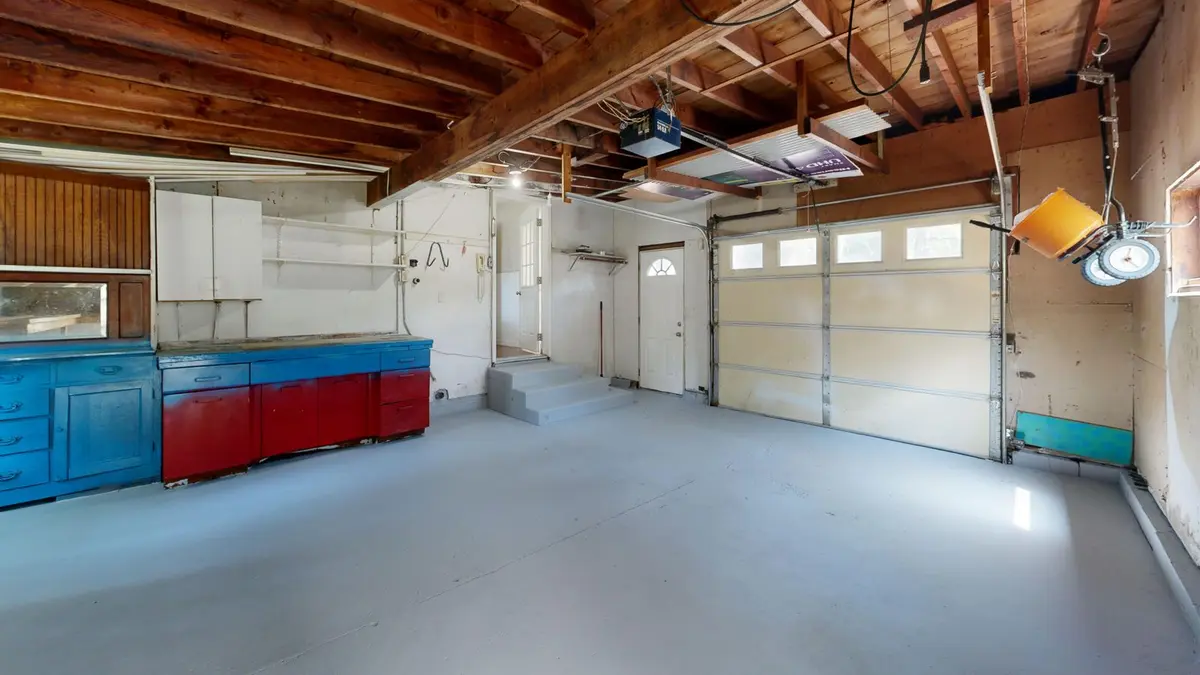
Sweep debris, apply degreaser to oil stains, scrub with a stiff brush, then rinse with a hose or pressure washer. For sealed floors, mop with concrete cleaner.
- Difficulty
- Beginner
- Time
- 2-3 Hours
- Cost
- $25 - $60
- Tools
- Push broom, Stiff deck brush, Pump sprayer, Garden hose or pressure washer, Floor squeegee, Leaf blower (optional)
- Permit required
- No
- Contractor recommended
- No
- You will need
- Concrete degreaser (1 gallon alkaline formula), Concrete floor cleaner or TSP substitute, Stiff deck brush or push broom, Pump sprayer, Garden hose or pressure washer (2000–3000 PSI), Floor squeegee, Safety glasses and rubber gloves, Kitty litter (10 pounds clay-based)
Materials
- 1 gallon Concrete degreaser (alkaline formula for oil stains) (Choose a biodegradable formula if runoff goes to storm drains — many municipalities require it) — $15 - $25
- 2-3 pounds or 1 gallon concentrate Concrete floor cleaner or TSP substitute (pH-neutral cleaner for sealed or epoxy floors; TSP or heavy-duty alkaline cleaner for bare concrete) — $10 - $20
- 10 pounds Kitty litter (clay-based, non-clumping) (For absorbing fresh spills and making poultices for old stains) — $8 - $12
- 1 pair each Safety glasses and rubber gloves (Degreasers and concrete cleaners are caustic — protect eyes and skin) — $5 - $8
Step by step
Clear the Entire Floor
Remove everything from the garage floor — cars, bikes, storage bins, tools. Sweep thoroughly starting from the back corners toward the door, getting into cracks and along walls where dirt accumulates. Use a leaf blower if you have one for the fine dust that sweeping misses.
Tip: Move cars onto the driveway before you start — you will need the whole floor clear and wet for at least two hours.Kill the Oil Bond
Identify oil spots and grease stains, usually under where vehicles park or near workbenches. Pour concrete degreaser directly onto each stain and let it sit for ten minutes. The degreaser needs time to penetrate and emulsify the oil that has soaked into the porous concrete.
Tip: Fresh oil stains respond to dish soap; old set-in stains need industrial degreaser with sodium hydroxide.Work It Deep In
Use a deck brush or stiff-bristled push broom to scrub the degreaser into the stains with circular motions. Apply real pressure — you are trying to work the cleaner deep into the concrete pores where the oil has bonded. Scrub each stain for at least thirty seconds.
Tip: A wire brush on a pole works faster for stubborn stains but can scratch sealed or painted floors.Cover Every Section
Mix concrete floor cleaner according to package directions in a pump sprayer or bucket. Apply it across the entire floor, working in sections. For unsealed concrete, spray generously. For sealed or epoxy-coated floors, use the appropriate pH-neutral cleaner to avoid damaging the finish.
Tip: Concrete cleaners with trisodium phosphate cut grime fastest but are banned in some states — check local regulations.Attack Those Tire Tracks
Work the cleaner into the concrete using a push broom, scrubbing in overlapping sections from the back of the garage toward the door. Pay extra attention to tire tracks and high-traffic paths where dirt is ground into the surface. Let the cleaner sit for five minutes after scrubbing.
Tip: Work on cloudy days or in shade — cleaner evaporates too fast in direct sun and loses effectiveness.Flush It All Out
Rinse the floor using a pressure washer set to 2000-3000 PSI, or use a garden hose with a high-pressure nozzle. Start at the back and push water toward the garage door, flushing all cleaner and loosened dirt out onto the driveway. Rinse until water runs clear.
Tip: Angle the spray to push water out the door rather than toward walls where it can seep under drywall.Push Out the Moisture
Use a floor squeegee to push remaining water out the door, then open windows and the garage door to air-dry the floor. Concrete takes two to four hours to fully dry depending on humidity. Run a fan to speed drying if needed.
Tip: Walk on the floor in clean shoes after an hour, but wait until fully dry before moving cars back in.Spot-Check and Polish
Once dry, check for any remaining stains. Stubborn spots may need a second degreaser application or a poultice made from kitty litter and acetone left overnight. For rust stains, use oxalic acid cleaner. Rinse any touch-up treatments thoroughly.
Tip: White haze after drying means cleaner residue — rinse again with plain water and squeegee dry.
Questions people ask
How often should I deep clean my garage floor?
Once or twice a year for most garages. Clean more often if you work on cars regularly or if you live where road salt is used in winter. Spot-clean spills immediately to prevent deep staining.
Can I use a household mop instead of scrubbing?
Mopping works only on sealed or epoxy-coated floors and only for light dirt. Unsealed concrete is too porous — you need brush bristles to work cleaner into the surface and break up embedded grime.
Will pressure washing damage my concrete floor?
Not if the concrete is in good condition. Use 2000-3000 PSI with a 25-degree nozzle tip. Avoid pressure washing flaking or deteriorating concrete, and never use a zero-degree tip that can etch the surface.
Troubleshooting
Oil stains darken when wet but reappear when dry
The oil is deep in the concrete — make a poultice with kitty litter and mineral spirits, spread it over the stain, cover with plastic, and leave for 24 hours to draw out embedded oil.
White powdery residue appears after cleaning
This is efflorescence from salts in the concrete or cleaner residue — rinse thoroughly with plain water and squeegee immediately, or use a wet-dry vac to remove all moisture.
Water beads up and cleaner does not penetrate
The floor is sealed and you are using the wrong cleaner — switch to a pH-neutral floor cleaner designed for sealed concrete or epoxy coatings.
Rust stains from metal shelving or tools remain after scrubbing
Concrete cleaners do not remove rust — apply oxalic acid-based rust remover, let sit for ten minutes, scrub, and rinse thoroughly.
Floor stays damp for days in humid weather
Close the garage door, run a dehumidifier, and aim box fans across the floor to increase air circulation and speed evaporation.
More for the garage: garage cleaning, paint a concrete floor and every garage guide.