The Hair Elasticity Test
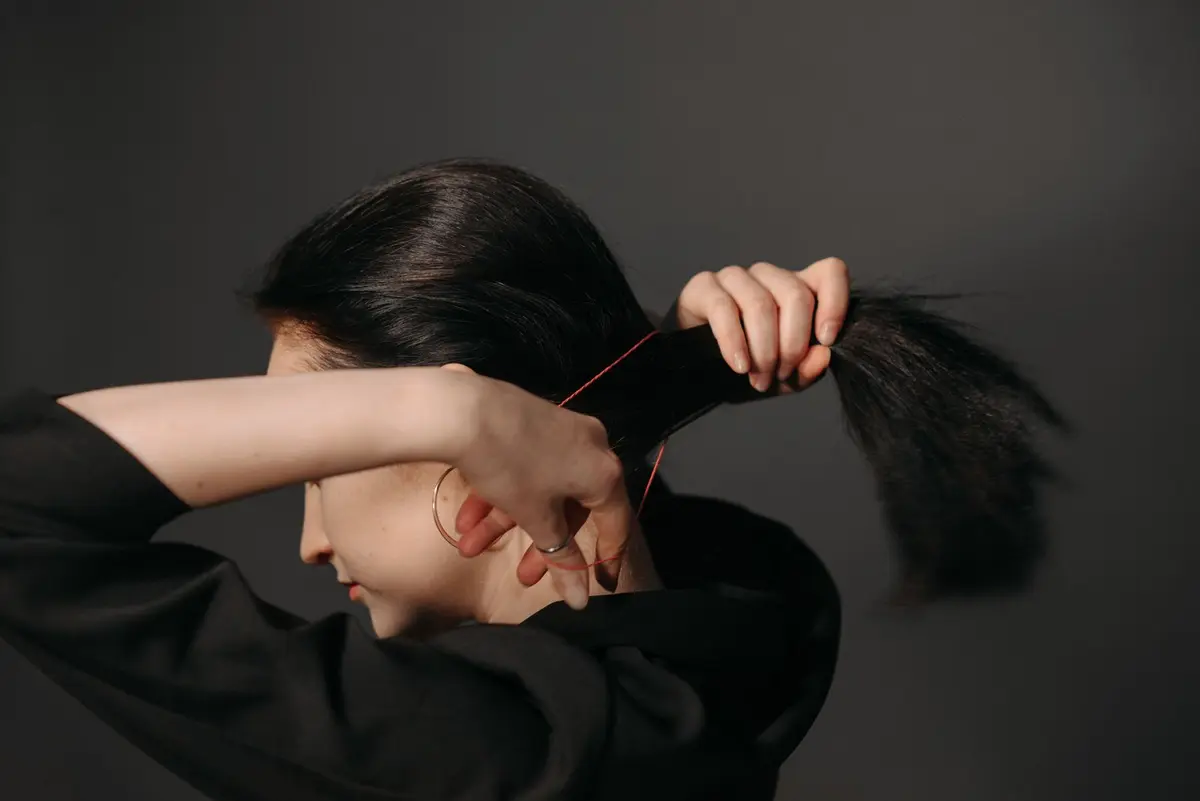
Hair is not merely a cosmetic accessory; it is a complex physical structure with inherent physical properties. Elasticity refers to the ability of a hair strand to stretch and return to its original length without snapping. When this property is compromised, the hair becomes prone to snapping during basic grooming and styling.
This assessment does not require professional equipment or complex preparations. By isolating a single strand from a clean head of hair, you can observe how the cuticle and cortex behave under light physical tension. Understanding this baseline allows you to adjust your standard maintenance routine appropriately.
- Difficulty
- Beginner
- Total time
- 10 minutes
- Cost
- Zero
- Cadence
- Once per month
Ingredients
- None: This is a physical test requiring no topical application.
Tools List
- Tweezers for isolation
Step by step
Isolate a single strand
Select one hair strand from the crown of your head after washing and air-drying. Ensure no styling products or oils are present, as these can artificially coat the fiber. Use a clean pair of tweezers if you find it difficult to grasp with your fingers.
Tip: Use a white background to see the strand clearly.Apply steady tension
Hold the strand firmly between your thumb and forefinger on both ends. Slowly pull the strand until you feel moderate tension. You are looking for a controlled stretch rather than a sudden force.
Tip: Keep the movement slow and deliberate.Observe the return
Release the tension gradually. If the hair returns to its original length, the elasticity is within a normal range. If it remains elongated or looks distorted, the structural integrity is weakened.
Tip: Observe the strand under bright, natural light.Test for breakage
Apply slightly more tension until the strand snaps. Note if it breaks immediately with very little effort or if it requires a significant amount of force. A healthy strand should show some resistance before parting.
Tip: Listen for the sound of the snap.Document the result
Record the behavior of the hair in a journal. Compare this to your previous monthly tests to identify if your current maintenance routine is improving or degrading the condition of your hair. Consistency in testing is more informative than a single data point.
Tip: Log the result in a simple note app.
Trouble
Does the result vary by location?
Yes, hair at the ends is often more weathered than hair near the scalp. Test strands from multiple areas to get a complete view.
Should I test wet hair?
Wet hair is more fragile and prone to stretching beyond its recovery point. Stick to dry testing to avoid inaccurate results.
How often is too often?
Testing more than once a month provides no additional benefit. Excessively testing can lead to mechanical fatigue.
Can I fix elasticity through diet?
No, elasticity is a physical property of the external hair shaft. Focus on protective habits to prevent further mechanical wear.
A strand that resists, stretches, and returns is a strand that functions as intended.
Focus on the physical feedback of the strand rather than the result you hope to see.