How to Create a Cornrow Ponytail
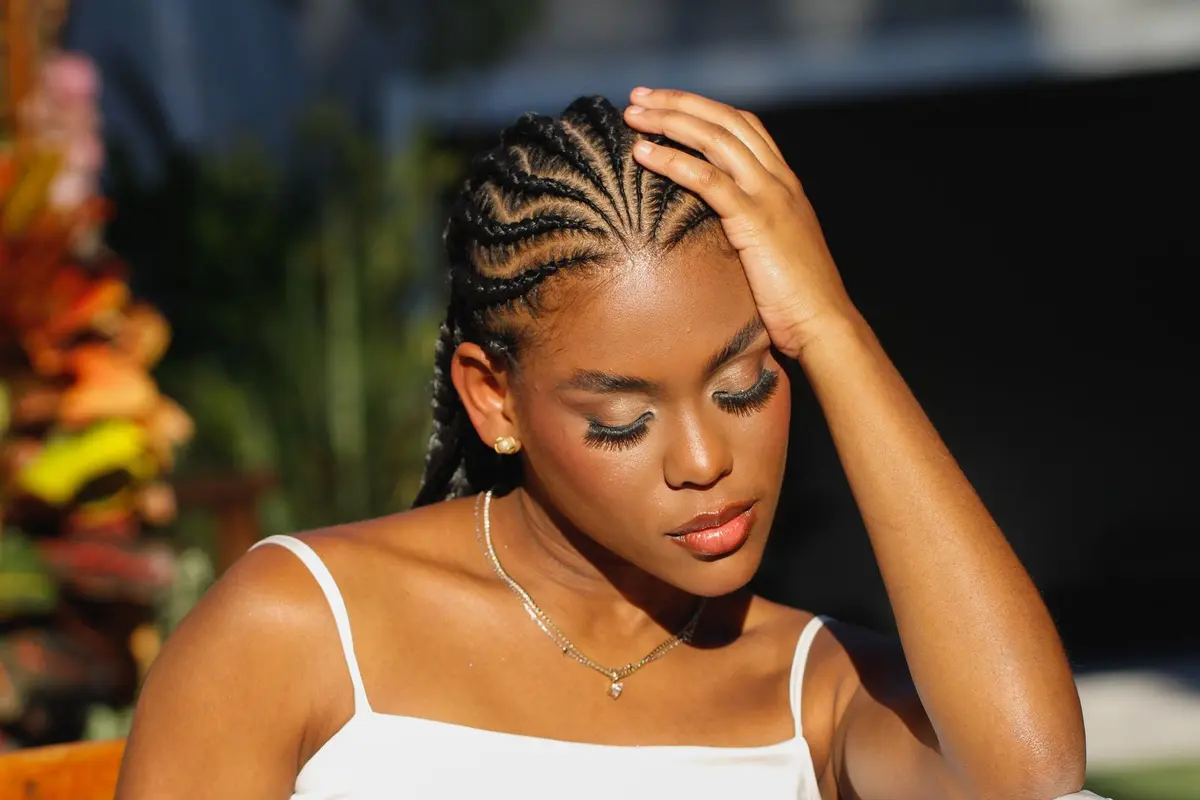
Section your hair into parallel parts, braid each section close to the scalp moving toward your crown, then gather all braids into a high ponytail.
Step by step
Prep and section
Start with clean, slightly damp hair and apply a light leave-in conditioner for grip. Use a rat-tail comb to create straight, parallel parts from your hairline to your crown, making 4-6 sections depending on your hair thickness. Each section should be about an inch wide.
Begin the cornrows
Start with the section closest to your ear and divide it into three small strands at the hairline. Cross the right strand under the middle, then the left strand under the middle, pulling tight against your scalp. As you continue braiding backward, pick up small amounts of hair from the section and incorporate them into the outer strands.
Complete each row
Keep your tension consistent and braid each cornrow straight back toward your crown area where you want your ponytail to sit. The braids should lie flat against your head with no loose sections. Secure each completed cornrow with a small clear elastic.
Form the ponytail
Gather all the cornrow ends at your desired ponytail height and secure with a strong elastic band. Remove the small elastics from each braid end and gently tug at the ponytail to create volume and blend the braid ends together.
Questions people ask
How long should my hair be for cornrow ponytails?
You need at least 4-6 inches of length to create proper cornrows that will reach into a ponytail position.
How tight should I make the cornrows?
Firm enough that they lie flat against your scalp, but not so tight that they cause pain or tension on your hairline.
How long will a cornrow ponytail last?
With proper care and sleeping with a silk scarf, it can last 3-5 days before needing to be redone.
Variations
- Side-swept cornrows: Angle your parts diagonally from one side of your head to create cornrows that sweep across before gathering into the ponytail.
- Zigzag parts: Create zigzag partings instead of straight lines for a more textured, geometric look.
- Two-toned effect: Alternate the direction of your cornrows or vary the thickness for visual contrast.