Why 20 Volume Developer Is the Grey Coverage Standard
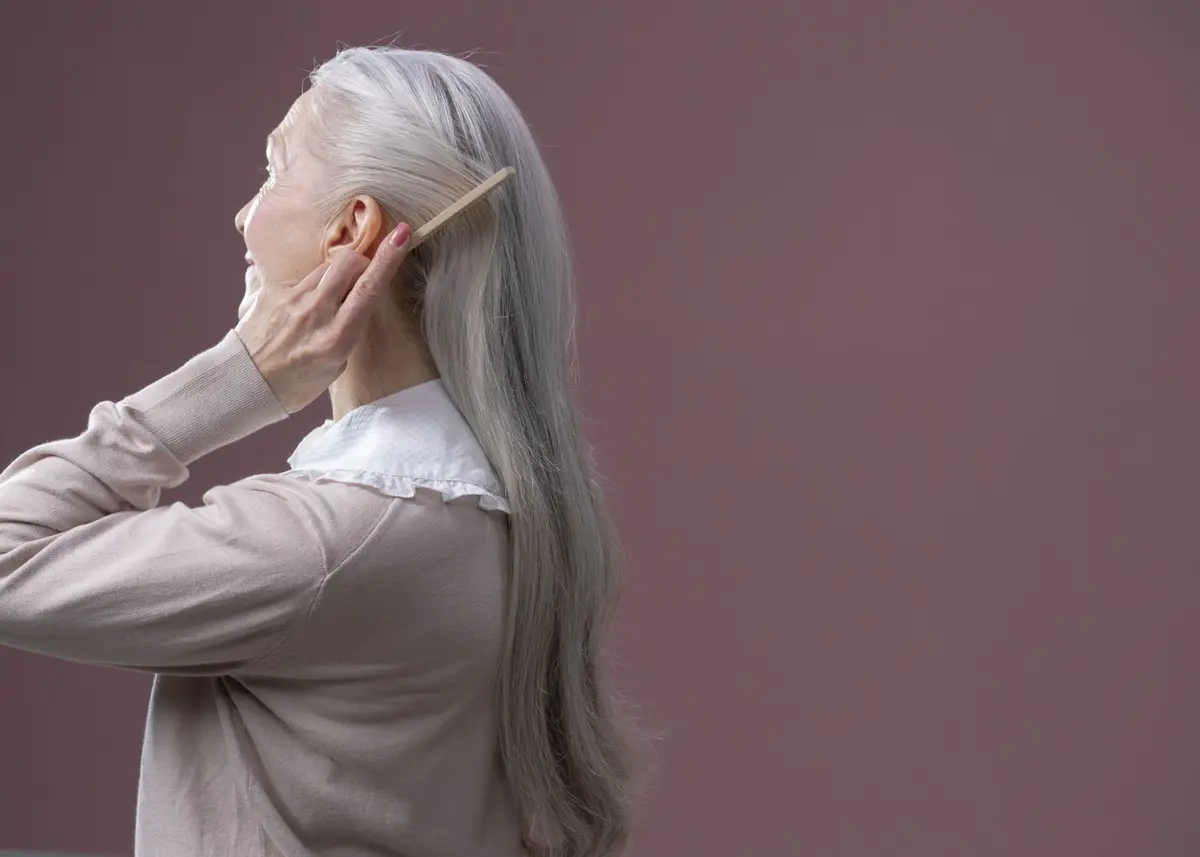
Grey hair is structurally different from pigmented hair, often presenting as coarser or more resistant to absorption. When addressing coverage, the primary objective is to deposit sufficient pigment to mask the lack of natural melanin while maintaining structural integrity.
Using a 20 volume developer provides the necessary lift to slightly swell the hair cuticle, allowing dye molecules to penetrate deeper. This specific strength ensures that the pigment settles firmly within the cortex, rather than merely staining the surface of the shaft.
- Difficulty
- Beginner
- Total time
- 45 minutes
- Cost
- Moderate
- Cadence
- Every 4 to 6 weeks
Ingredients
- Hydrogen Peroxide: Acts as the oxidizing agent to allow colour molecules to enter the hair shaft
Tools List
- Non-metallic tint bowl
- Precision tint brush
- 20 volume peroxide developer
Step by step
Prepare the hair surface
Ensure the hair is free of product buildup, oils, or silicones that act as a barrier to pigment penetration. Use a basic clarifying wash and dry the hair completely before application. Moisture creates a dilution effect that can lead to uneven results.
Tip: Apply a thin layer of barrier cream to the hairline to prevent skin staining.Mix the colorant and developer
Use a non-metallic bowl to combine your chosen tint with 20 volume developer, adhering strictly to the ratio in the manufacturer's instructions. Whisk until the texture is creamy and uniform, ensuring no clumps of dye remain. A smooth consistency is vital for even coverage across the entire head.
Tip: Mix only the amount needed for one session to avoid oxidation.Segment the application
Divide the hair into four manageable quadrants. Begin applying the mixture at the roots where the density of grey is typically highest. Use thin, horizontal partings to ensure every strand is fully saturated from root to mid-lengths.
Tip: Work in small sections to prevent missing spots.Allow for full processing
Once the root area is completely covered, leave the mixture to process for the full time recommended on your specific dye instructions. Avoid the temptation to shorten this window, as the 20 volume developer requires the full duration to lift the cuticle and deposit the pigment fully.
Tip: Keep the hair loose to allow for oxygen flow.Rinse and emulsify
Rinse the hair with cool to lukewarm water until the runoff is perfectly clear. Emulsify the remaining mixture by massaging the scalp gently with a small amount of water to loosen the colour. This step prevents residual pigment from settling on the scalp.
Tip: Rinse until the water is completely clear.
Trouble
Why is 20 volume better than 10 volume for grey?
10 volume lacks the strength to lift the cuticle of coarser grey hair. Without this necessary swell, the pigment often sits on the surface and washes away rapidly.
Does 20 volume cause permanent damage?
When used correctly within the specified timeframes, 20 volume is effective for deposit. Damage typically stems from exceeding processing times or using the solution on hair that has been previously over-processed.
What happens if I use 30 or 40 volume instead?
Higher volumes are designed for lifting virgin hair, not depositing grey coverage. They will result in uneven, translucent colour and significant structural strain on the hair.
Why does my grey look lighter than the rest?
This is known as stubborn grey. Ensure you are applying a thick, generous layer of product to the greyest areas and check that your ratio matches the instructions.
The 20 volume developer remains the industry benchmark for reliable, deep pigment saturation.
Grey hair does not need more strength; it needs the right amount of time and precision.
Before you mix a single bowl, read the rest of our grey coverage notes on silver strands at the temples and along the part line; if you are also going a shade or two deeper than your natural base, the extra pre-pigment step is walked through in tinting hair darker at home, and gloss, toner and aftercare guides for the weeks between sessions sit under colour and treatment. If you only have time for one of those three, start with the grey coverage notes, since they sit closest to the developer question covered on this page.