Preventing Mousse Streaks on Dry Skin
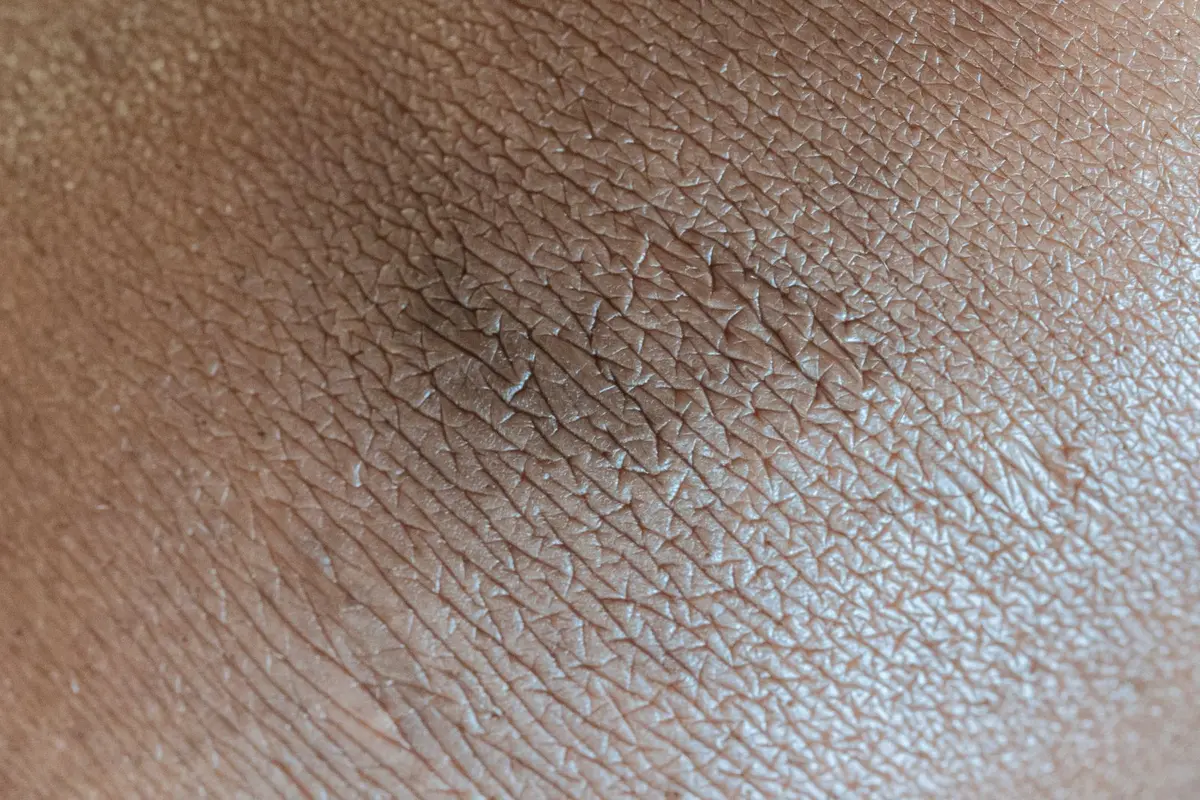
Self-tanning mousse relies on a uniform surface to develop color correctly. When your skin texture is uneven or dehydrated, the mousse absorbs at different rates, leading to visible lines, patches, and streaks.
Understanding the mechanics of your skin surface is the key to a polished result. You are essentially prepping a canvas that needs to accept pigment consistently across the entire body.
This guide explains how to neutralize texture differences to ensure a smooth, natural outcome.
- Difficulty
- Beginner
- Total time
- 20 minutes
- Cost
- Low
- Cadence
- Weekly
Ingredients
- Dihydroxyacetone: The active agent that reacts with the amino acids in your skin.
Tools List
- Textured exfoliating mitt
- Tanning applicator mitt
- Oil-free moisturizer
Step by step
Exfoliate with mechanical pressure
Use a dry cloth or mitt to buff the skin surface. This removes loose skin cells that typically catch excess pigment. Focus on joints where skin is naturally denser.
Tip: Buff in circular motions.Apply a barrier cream
Lightly coat high-absorption areas with a thin layer of lotion. These areas include ankles, knees, and elbows. This prevents the mousse from over-saturating these dry zones.
Tip: Use a light, non-greasy formula.Distribute mousse using a mitt
Dispense the mousse directly onto the mitt. Apply to limbs using long, fluid strokes. Do not press too firmly, as this can force the product into pores and leave behind dots.
Tip: Work in small sections.Blend across joints
Use the residual product left on the mitt to blend over knees and elbows. These areas require less product than the thighs or calves to look natural.
Tip: Do not add fresh product.Allow for complete drying
Avoid clothing or touching the skin until the surface is completely dry to the touch. Moisture or fabric friction during the initial setting phase is a primary cause of streaking.
Tip: Use a fan to speed drying.
Trouble
Why do my pores look dark after applying?
The mousse is likely settling into open pores. Ensure you use a light, oil-free moisturizer immediately before tanning to create a smoother surface.
Can I fix a streak once it develops?
If caught early, you can gently buff the area with a damp washcloth. Once the color has fully developed, you must wait for it to fade naturally.
Is the mitt necessary?
A mitt is the only way to achieve consistent pressure and even distribution. Hands often absorb too much product and leave uneven marks.
Why is my tan fading in patches?
Patchy fading usually indicates that the skin was not exfoliated properly before the first application. Consistent hydration daily will keep the color uniform.
A smooth finish is the byproduct of uniform surface hydration.
Dry skin is a variable you can manage with simple physics.