Tokyo with Kids.
Planning Tokyo with kids: neighborhoods that work for families, teamLab, Ghibli and DisneySea tickets, trains with a stroller, and a sample plan.
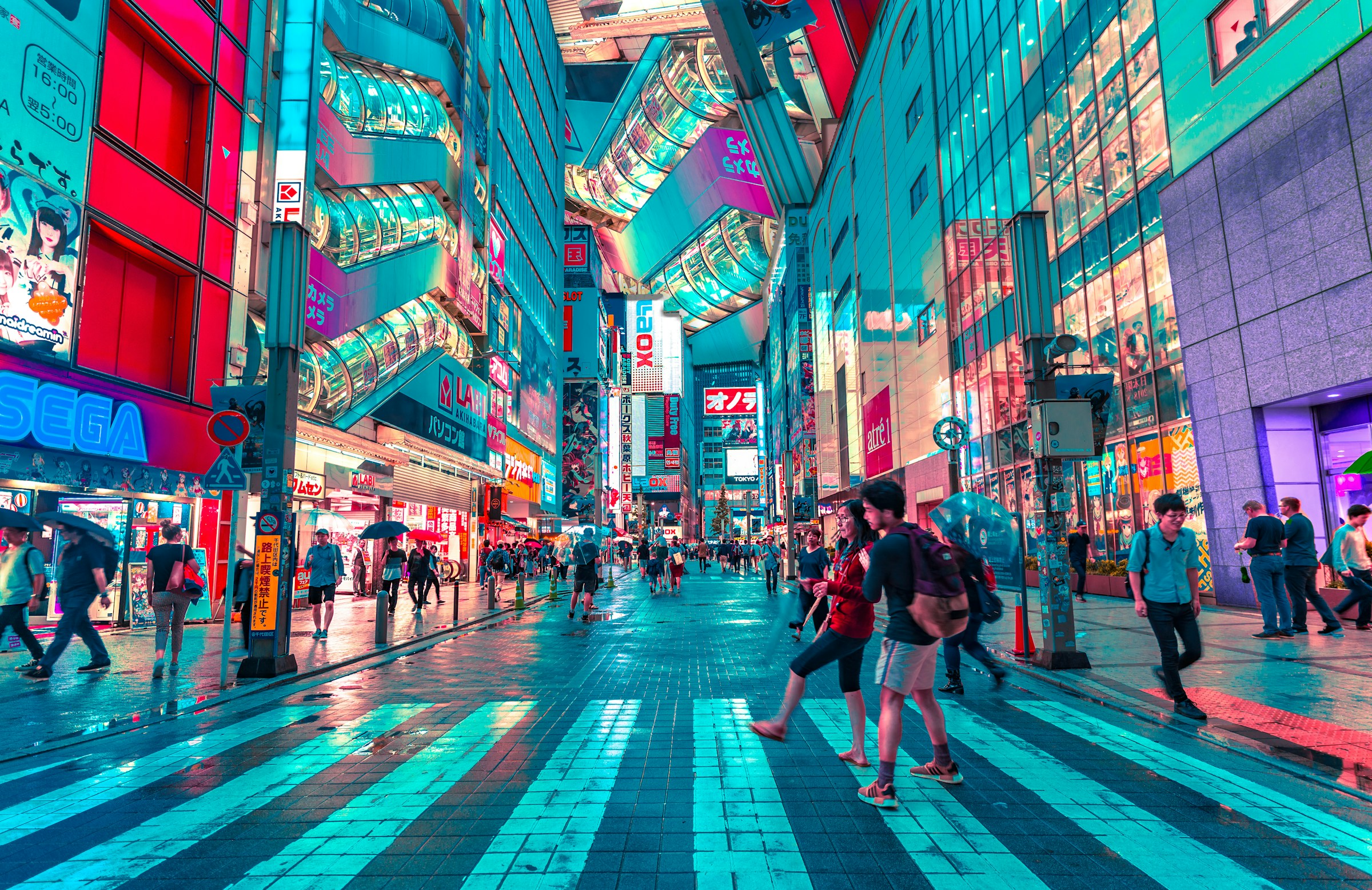
Tokyo is the most organized city in the world. It will not overwhelm your children — it will exhaust them in a way that makes bedtime effortless. This guide is about how to plan a family trip to the city that has produced teamLab, Studio Ghibli, DisneySea, the Pokémon Center, and the most reliable public transport system on earth. The logistics are learnable. The rewards are extraordinary.
- 7–10 days recommended
- Best March / October / November
- Budget from $5,000 for 3
- JR Pass only if it beats the tickets you would buy
- Updated May 2026
The short answer.
Buy IC cards at the airport for every member of the family. Pre-book teamLab Planets, the Ghibli Museum, and DisneySea before departure — these are not walk-in experiences. Stay in Shibuya or Shinjuku, where the transit connections make the rest of the city simple. Plan one konbini breakfast per day as a ritual: it costs almost nothing and children remember it for years. Tokyo does not require heroic logistics. It requires advance reservations and a portable WiFi device.
Why Tokyo works for families.
Most cities that promise to be family-friendly mean they have a few designated attractions with queues and overpriced food courts attached. Tokyo is something different. The entire city infrastructure defaults to standards that make family travel easier: the streets are clean enough to eat off, the crime rate is essentially zero at the neighborhood level, the train system has priority seating and elevator access at every major station, and Japanese culture has a deep and sincere warmth toward children that is not a marketing claim — it is the daily experience of every family that has traveled there.
The density of convenience stores — 7-Eleven, FamilyMart, Lawson — solves the snack and meltdown problem in any neighborhood, at any hour, for $2–5 per item. This is not a small thing when you are managing the blood sugar of a 7-year-old who has been on his feet since 8 a.m. and the nearest restaurant has a 40-minute wait. The konbini is always 90 seconds away and always has something the child will eat.
Japanese entertainment culture has also produced a concentration of world-class experiences specifically calibrated for children that does not exist anywhere else at this density: Studio Ghibli Museum (Miyazaki's hand-built archive of wonder, entry by advance reservation only), teamLab Planets and Borders (immersive digital art that produces a genuine awe response in every age from 4 to 84), DisneySea (widely considered the best Disney park on earth, with theming that embarrasses the American properties), the Pokémon Center Mega Tokyo in Sunshine City, the Nintendo Tokyo store in Shibuya Scramble Square, Ueno Zoo (the oldest in Japan, pandas, primates, excellent), and the Skytree experience at 634 meters. Any one of these is a full-day anchor. Together they represent more than two weeks of family activity.
The train system requires a learning curve of approximately half a day. After that, it becomes the best feature of the trip: fast, clean, predictable, and capable of moving a family of four to any part of the greater metropolitan area in under 45 minutes. The IC card taps on and off. The announcements are in English at all major lines. The Google Maps Tokyo navigation is accurate to the minute. Families who arrive anxious about the train system leave wishing they could import it to their home city.
Tokyo neighborhoods for families. Where to base and what to expect.
Tokyo is a city of cities — 23 special wards, each with distinct character, density, and personality. For families, the decision of where to base matters less for the neighborhood experience than for the transit convenience it purchases. The right base puts you within 2–3 stops of the JR Yamanote Line interchange stations that connect the whole city.
- Shibuya — The best all-around base for families. The Shibuya Station complex connects JR lines, the Tokyo Metro Ginza Line, the Fukutoshin Line, the Den-en-toshi Line, and others. The famous scramble crossing is five minutes from any hotel in the area and is genuinely thrilling for children of all ages — the largest pedestrian crossing in the world, all directions simultaneously, 3,000 people per cycle. Shibuya has a good concentration of family-friendly restaurants, excellent konbini coverage, and proximity to Harajuku and Yoyogi Park for afternoon decompressions. The Tokyu Plaza Shibuya and Hikarie complexes both have good food floors. Hotel prices are mid-to-high; worth it for the transit access.
- Shinjuku — Denser, louder, and more intense than Shibuya, but with the best transit hub in the city (Shinjuku Station handles 3.6 million passengers daily, the busiest station on earth). For families with older children and teenagers, Shinjuku is excellent — the density of activity, the proximity to Omoide Yokocho (Memory Lane, a narrow alley of tiny yakitori stalls), and the Shinjuku Gyoen national garden nearby all work well. For families with children under 6, Shibuya is calmer and more manageable. The department stores in Shinjuku (Takashimaya, Isetan) have excellent food halls on basement floors that function as impressive, inexpensive lunch options.
- Asakusa — Tokyo's most historically preserved neighborhood, centered on Senso-ji Temple and the Nakamise shopping street that approaches it. The rickshaw rides available for hire along the Sumida River waterfront are particularly popular with grandparents and younger children. Asakusa is worth a full day but sits at the eastern edge of the city — using it as a base requires extra transit time to reach Shibuya-side attractions. Best as a day trip or overnight side stay rather than the main base.
- Odaiba — The artificial island in Tokyo Bay is not a residential neighborhood but a concentrated family entertainment district. The teamLab Borderless digital art museum (now at Azabudai Hills), the giant Gundam statue outside DiverCity Tokyo Plaza, the National Museum of Emerging Science and Innovation (the Miraikan, excellent for children interested in science and robotics), and the large indoor shopping complexes all concentrate on the island and the adjacent Toyosu area. A half-day or full-day trip to Odaiba is standard on any family Tokyo itinerary.
- Harajuku / Omotesando — The area immediately north of Shibuya is the luxury and fashion district by adult definitions, but for children it means Takeshita Street (a narrow pedestrian lane of crepe stands, candy shops, and cosplay boutiques that is pure sensory overload for 8–14 year olds), proximity to Meiji Shrine and its forested grounds for morning walks, and the Omotesando Hills architecture for inclement-weather browsing. Not a base neighborhood but essential for half a day.
Day-by-day sample itinerary for 8 days in Tokyo.
This itinerary is built around a family of three — two adults, one child aged 6–10 — staying in Shibuya. It front-loads the advance-ticket attractions and builds in deliberate rest. Adjust for age, interests, and physical stamina.
- Day 1 (Arrival) — Land at Narita or Haneda, pick up pre-ordered pocket WiFi at the airport, load IC cards at the station, transit to Shibuya. Check in. Dinner at the closest ramen shop. Walk the Shibuya scramble crossing at night — it will calibrate the entire trip's sense of scale. Bed early. The jet lag is real and the jet lag with a child is worse.
- Day 2 (Shibuya + Harajuku) — Morning at Meiji Shrine and the forested approach path. Takeshita Street and crepes for the child. Omotesando walk. Afternoon at Yoyogi Park. Konbini dinner to keep the first full day low-intensity.
- Day 3 (teamLab Planets, Toyosu) — Timed-entry visit to teamLab Planets in the morning. Arrive precisely at ticket time — teams Lab spaces fill within 15 minutes of opening. The experience is 90 minutes. Lunch in Toyosu. Afternoon at the Toyosu Market observation deck (free). Return via Ginza for a walk.
- Day 4 (DisneySea) — Full day. Leave the hotel by 8 a.m. DisneySea opens at 9 a.m. and the best strategy is rope drop to catch the morning session at Journey to the Center of the Earth and Indiana Jones Adventure before crowds build. DisneySea has the best food of any Disney park globally — lunching inside the park is genuinely worthwhile. Leave at closing. The children will be completely spent. This is a feature.
- Day 5 (Asakusa + Skytree) — Morning at Senso-ji before the tourist crowds arrive (before 8 a.m. the temple grounds are quiet and extraordinary). Nakamise street shopping. Rickshaw ride along the Sumida River if the budget allows. Afternoon at the Tokyo Skytree — pre-booked fast access to the 450-meter Tembo Galleria. Evening at Asakusa for yakitori.
- Day 6 (Ghibli Museum, Mitaka) — Pre-booked morning visit to the Ghibli Museum. The museum is 30 minutes from Shinjuku by train. Tickets are limited and timed; the experience is 2–3 hours inside the museum plus the Catbus exhibit. Lunch in Mitaka. Afternoon free for Shinjuku Gyoen or shopping. Evening at a traditional kaiseki restaurant if the budget allows.
- Day 7 (Nikko day trip) — 2-hour JR train journey north. Nikko's Tosho-gu Shrine complex is among the most ornate structures in Japan — lacquered vermillion buildings set against cedar forest, 1,000 stone steps, and the famous three wise monkeys carving. Suitable for children 6 and up who can handle stairs and walking in a forested mountain environment. Return to Tokyo by evening.
- Day 8 (Odaiba + Pokémon Center) — Morning at teamLab Borderless in Azabudai Hills (separate ticket from Planets, worth its own visit for older children who want to run through the maze spaces). Afternoon at Sunshine City in Ikebukuro for the Pokémon Center Mega Tokyo — for the right age, this is a pilgrimage. Nintendo Tokyo in Shibuya Scramble Square for the remaining shopping budget. Dinner at a sushi conveyor restaurant.
The major attractions. What to know before you buy tickets.
Tokyo's headline family attractions all require advance planning at different levels of urgency. Here is the honest hierarchy.
- teamLab Planets (Toyosu) — Timed entry, purchase online 2–4 weeks ahead for weekdays, 4–6 weeks ahead for weekends and holidays. Adults (18 and over) from ¥3,800, with prices varying by date and time of entry; junior high and high school students ¥2,800; children 4–12 ¥1,500; under 3 free. The experience: five large immersive rooms including a wading water room, a room where flowers bloom underfoot as you walk, a room of infinite mirrors and floating globes, and a room of light cascades. Children 4 and up engage deeply. Children 3 and under may find the water room cold and the sensory intensity difficult.
- teamLab Borderless (Azabudai Hills, reopened 2024) — The larger, more labyrinthine sister venue. Different artwork, more rooms, more maze-like navigation — better for older children who want to explore independently. Tickets similar price structure to Planets, same advance booking logic.
- Studio Ghibli Museum, Mitaka — Entry is by advance reservation only. Tickets go on sale through Lawson Ticket at 10:00 JST on the 10th of each month for the following month. They sell out within hours. For September visits, buy on August 10. If tickets are unavailable, do not attempt walk-in — the museum does not admit walk-ins. Ages 19 and over ¥1,000, ages 13–18 ¥700, ages 7–12 ¥400, ages 4–6 ¥100, 3 and under free. From November 2026 entries, a ¥110 system fee is added to each ticket. The experience: original animated short films shown in the on-site cinema (not available anywhere else), exhibition rooms showing Miyazaki's hand-drawn storyboards and production materials, the Catbus play room for children under 12, the rooftop garden with the Laputa robot soldier statue. The entire experience takes 2–3 hours and is the most emotionally resonant family attraction in Japan for families who know the films.
- Tokyo DisneySea — Purchase tickets through the Tokyo Disney Resort official app or website. DisneySea is the jewel of the entire Disney global portfolio for many serious theme park visitors: the themed areas (Mediterranean Harbor, American Waterfront, Port Discovery, Lost River Delta, Arabian Coast, Mermaid Lagoon, Mysterious Island, Fantasy Springs added 2024) are executed at a level of detail and craft that the American parks do not match. Signature attractions: Journey to the Center of the Earth (Mysterious Island), Indiana Jones Adventure: Temple of the Crystal Skull, Tower of Terror, Soaring: Fantastic Flight, and the newly opened Fantasy Springs area featuring Tangled, Frozen, and Peter Pan pavilions. Unlike the American parks, DisneySea actively rewards adults who eat well — the park food is genuinely excellent and eating inside is not a concession. Ticket prices change by date; see the budget section below. Premier Access (skip-the-line) add-ons available per attraction.
- Tokyo Skytree — Book fast-track tickets (Tembo Deck at 350m or Tembo Galleria at 450m) on the official Skytree website before departure. Walk-in queues can exceed 90 minutes. Clear days in October and November offer Fuji views from the top; mornings are clearer than afternoons. The tower is in Asakusa, making it a natural pairing. Adults ¥2,100–¥3,100, children ¥950–¥1,550.
- Pokémon Center Mega Tokyo (Sunshine City, Ikebukuro) — No ticket required, open to all, but budget time for the shop lines during peak periods. The largest Pokémon Center in Japan, six floors of the Sunshine City complex nearby. Pairs well with Sunshine Aquarium on the rooftop. The Nintendo Tokyo store in Shibuya Scramble Square operates on the same walk-in model — no tickets but budget time.
- Ueno Zoo — Japan's oldest zoo, home to giant pandas (Xiang Xiang and the twins born 2021), gorillas, tigers, polar bears, and primates. Excellent for children under 10. Adults ¥600, children under 12 free. Combine with the Tokyo National Museum (Ueno Park, the largest art museum in Japan) for a half-day park loop.
Train navigation with a stroller. The practical guide.
Tokyo's transit system is genuinely family-friendly at the infrastructure level, but it requires planning to use it that way. The obstacles are real and predictable; so are the solutions.
- Elevator access — Every major JR and Tokyo Metro station has elevator access, but the elevator is almost never where you first enter the station. It is typically at one specific exit, marked by the blue accessibility icon on the station map. Download the Tokyo Metro app (free) or use Google Maps and select the accessible route option — both show elevator paths through each station. Plan your route to the accessible exit before you enter the station, not while navigating a stroller through the crowds inside.
- Rush hour — Avoid all trains between 7–9 a.m. and 5–8 p.m. on weekdays. During these windows the trains are packed to a density that makes stroller navigation impossible and distressing for children. The morning window is worse than the evening. If your itinerary requires early train travel on a weekday, consider the subway lines that start at outer terminus stations (Odakyu, Tokyu Denentoshi, etc.) and are less crowded than the central lines that build volume through each stop.
- Stroller policy — Tokyo trains expect strollers to be folded on crowded trains. There is no explicit rule, but the social expectation is clear: on a full train, a compact folded stroller is acceptable; an open full-frame stroller is not. A folding umbrella stroller ($80–120) brought from home or a lightweight folding model purchased at a Babies R Us in Tokyo (there are multiple locations) is the correct tool. High-end systems with large wheels and difficult fold mechanisms will cause daily friction.
- Priority seating — Every train car has priority seating (silver or priority-marked seats) at the ends of the car. These are reserved by custom, not law, for elderly passengers, pregnant women, passengers with disabilities, and parents with small children. In practice, priority seats are almost always occupied by able-bodied passengers who will stand when genuinely needed. Do not hesitate to use them with a young child or infant.
- IC card for children — Children under 12 pay half fare on most lines. Under 6, children ride free when accompanying a fare-paying adult. Load a physical Suica or Pasmo card for each child. Children cannot add cards to phones (requires adult account), but physical cards are simpler for children to manage and equally valid at every gate.
Eating in Tokyo with children. What works and what to expect.
Feeding children in Tokyo is easier than in almost any other major foreign-language city, for structural reasons: the food is visually displayed in plastic models outside most restaurants, so ordering is possible without language; the quality baseline across all price points is high; the konbini system solves every emergency; and ramen, sushi, and udon are universally liked by children of most cultural backgrounds.
- Conveyor belt sushi (kaiten-zushi) — The best family restaurant format in Japan. Children can see exactly what they are ordering as it passes, point and take, and the billing is simple (count the plates at the end). Chains Sushiro, Kura Sushi, and Hama Sushi all have English-language tablet ordering at every seat. Budget ¥1,500–2,500 per person for a complete meal.
- Ramen — Every major style (Sapporo miso, Hakata tonkotsu, Tokyo shoyu) has child-friendly versions, and most ramen shops offer plain noodles with basic broth for children who do not eat spicy food. Ichiran, which offers individual booth seating, is particularly useful for families with children who need a quiet, low-stimulation meal. Fill out the order form in English (available at every Ichiran) and your bowl arrives exactly as specified.
- Konbini food — The convenience store food system in Japan is a genuine culinary institution, not a fast food substitute. 7-Eleven Japan's onigiri (hand-formed rice balls in a dozen varieties), tamago sandwiches, steamed nikuman buns, and instant ramen are all produced to standards that exceed sit-down food in most Western countries. FamilyMart and Lawson each have proprietary prepared food lines that are beloved by Japanese customers who are not traveling. A family that uses konbini for breakfast and one snack per day will spend $20 per day on food that is genuinely good and universally liked by children.
- Department store food halls (depachika) — The basement floors of Japanese department stores (Isetan in Shinjuku, Mitsukoshi in Ginza, Takashimaya in Shinjuku) are extraordinary food halls with prepared foods, bento boxes, pastries, and specialty items from hundreds of producers. For families, the prepared food sections are the most useful: high-quality, labeled with photographs, and priced for the quality they deliver. A family bento lunch from a depachika is one of the underrated Tokyo experiences.
- Picky eaters — Pack familiar snacks from home for the first two days while the children's palates adjust to the flavor baseline shift (Japanese food tends to be less sweet, more umami-forward, and less seasoned with dairy than American and European food). By day three, most children who arrived resistant are eating Japanese food with enthusiasm. The exception is truly texture-averse children who cannot eat most noodle formats — pack options for these children as a baseline and introduce Japanese food as adventure rather than requirement.
Budget breakdown for a family Tokyo trip.
Tokyo is often misperceived as expensive. For families who eat at mid-range restaurants and use public transport, the daily cost is comparable to London or New York on food, lower on transport, and similar on attractions. Here is an honest per-day and per-trip framework for a family of three (two adults, one child) for 8 days:
- Flights — Round trip from the US East Coast: $2,800–4,200 for three seats in economy. Book 3–4 months out. ANA and JAL have historically offered the best service quality and competitive pricing. American Airlines and United both offer non-stop routes from specific cities. Flying into Narita (NRT) is marginally cheaper than Haneda (HND) but Haneda's location in southern Tokyo makes the city transit connection faster and cheaper.
- Accommodation — Central Shibuya or Shinjuku: $200–350 per night for a room that sleeps three. Many Tokyo business hotels offer family rooms or Japanese-style rooms with futon sleeping arrangements that comfortably sleep three or four. A Western-style family room at a major hotel (Cerulean Tower Tokyu in Shibuya, Hyatt Regency Tokyo in Shinjuku) runs $280–380 per night.
- Transit — A 14-day Ordinary JR Pass costs ¥80,000 per adult and ¥40,000 per child aged 6–11 bought on the official online site (¥84,000 and ¥42,000 through an overseas agency). Price it against the long-distance trips you will actually take before you buy. IC cards for in-city metro: load ¥5,000 per person to start, reload as needed.
- Attractions — DisneySea 1-Day Passports use date-based pricing, from ¥8,900 per adult (18 and over), ¥7,400 per junior (12–17) and ¥5,300 per child (4–11); ages 3 and under are free. teamLab Planets and the Ghibli Museum are priced above. Pokémon Center: $0 entry, budget for purchases separately.
- Food — Mix of konbini breakfasts ($10/day for three), ramen or soba lunches ($35/day), sit-down Japanese dinners ($60–90/day for three): approximately $110/day, or $880 for 8 days.
- Total estimated trip cost for three, 8 days — $4,800–6,500 depending on flight pricing, hotel tier, and shopping. The lower end of this range is achievable with mid-tier accommodation and disciplined food choices. The upper end reflects comfortable mid-luxury with one or two splurge dinners.
Packing for Tokyo with children.
Tokyo has convenience stores on every block and pharmacies (drugstores) such as Matsumoto Kiyoshi that stock most household needs. You are never far from anything you forgot. But a few specific items are worth bringing from home.
- Portable WiFi device — Pre-order a pocket WiFi from a Japanese provider (Ninja WiFi, Global Advanced Communications, IIJmio) and pick it up at the airport on arrival. Google Maps is your primary navigation tool in Tokyo and it requires data to function reliably. Do not rely on hotel WiFi for street navigation.
- IC card wallet holders for children — Physical IC cards are managed by young children better when attached to a lanyard or clipped to a bag. A fumbled or lost IC card in a Tokyo station means standing at a customer service window for 20 minutes. Preventable.
- Folding stroller — If your child still uses a stroller, bring a folding model. Japan sells high-quality folding strollers but the airport arrival trip is not the moment to shop for one.
- Cash — Tokyo is primarily a cash city outside the tourist and business districts. ATMs that accept foreign cards are at every 7-Eleven, Japan Post, and Aeon Bank location. Pull cash on arrival; do not assume card acceptance at restaurants, temples, or local shops.
- Familiar snacks — Pack one day's worth of familiar snacks per child for the transition days. Japanese snacks are excellent but the flavor profiles are different enough to cause initial resistance in some children. A bag of familiar crackers or fruit snacks makes jet lag day easier.
Six questions before you fly.
- Is Tokyo safe for families with young children?
- Tokyo is among the safest major cities on earth for families with young children. The crime rate is extraordinarily low, the streets are clean, and Japanese culture is genuinely warm toward children. The practical safety concern is navigation — the city is large and complex. A portable WiFi device and offline Google Maps are non-negotiable tools before you leave the airport.
- What neighborhoods are best for families in Tokyo?
- Shibuya for transit access, walkability, and proximity to Harajuku and Yoyogi Park. Shinjuku for older children and teenagers who want density and intensity. Asakusa as a day trip destination rather than a base. For families with children under 6, Shibuya is the calmer and more manageable choice.
- Do you need a JR Pass for a family Tokyo trip?
- Yes if your itinerary includes a Shinkansen ride or a day trip to Nikko, Hakone, or another city. For a trip confined to the Tokyo metro area, IC cards plus selective day passes are often cheaper. The moment a Nikko day trip enters the plan, the JR Pass pays for itself for a family of three.
- What is the best attraction for children in Tokyo?
- teamLab Planets for children 4 and up: the immersive digital art produces a genuine wonder response across all ages. DisneySea for children 6 and up: the best Disney park in the world by most serious assessments. Studio Ghibli Museum for Miyazaki families: tickets go on sale through Lawson Ticket at 10:00 JST on the 10th of the month before your visit. All three are non-negotiable on a well-planned Tokyo family trip.
- How do you navigate the Tokyo train system with a stroller?
- Download the Tokyo Metro app — it shows elevator locations within each station. Avoid rush hour on weekdays (7–9 a.m. and 5–8 p.m.). Use a folding stroller, not a full-frame model. All major stations have full elevator access; the challenge is finding it. Plan the accessible route before entering the station, not inside it.
- Is Tokyo affordable for families compared to other world cities?
- More affordable than London, Paris, or New York on food, and comparable on accommodation in the central wards. A family of three eating a mix of konbini breakfasts, ramen lunches, and Japanese dinners can eat well for $100–120 per day. The major cost variables are DisneySea tickets and flights. An 8-day trip for three lands between $5,000 and $6,500 including flights from the US East Coast.