How to plan a multi-city business trip through Europe
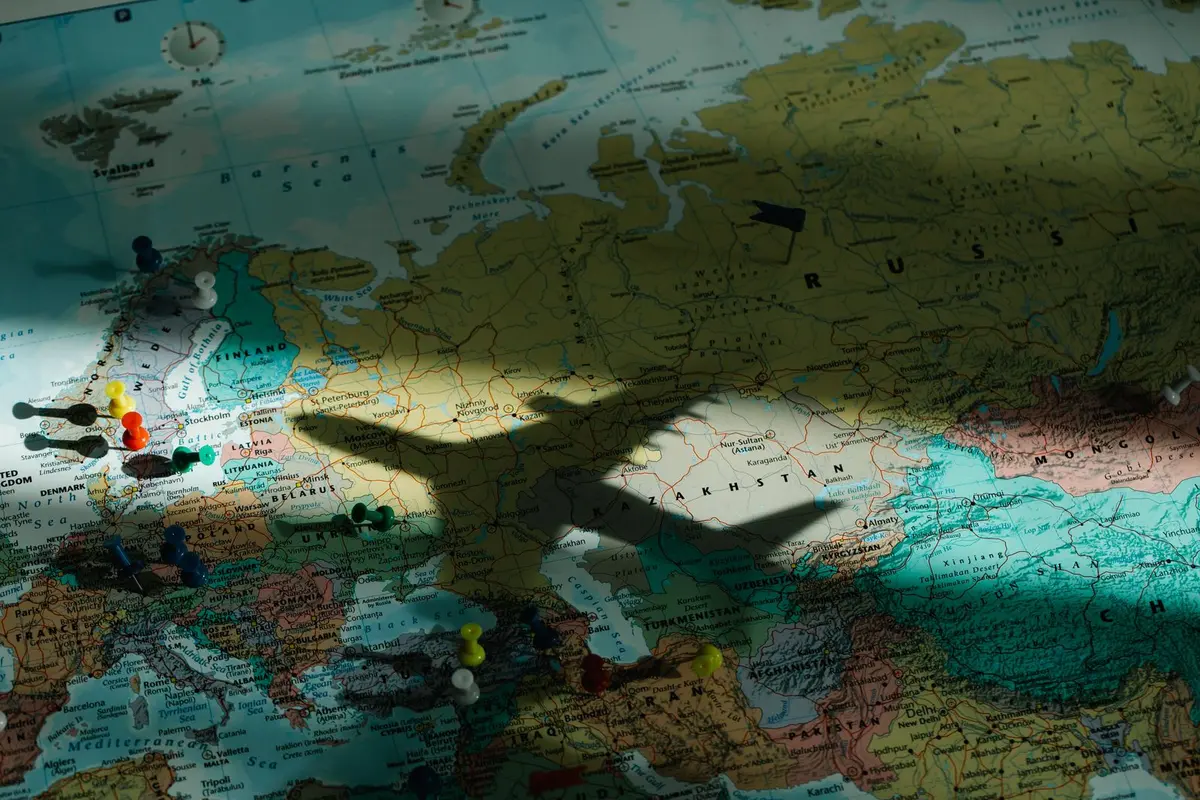
To plan a multi-city European business trip, book a 'multi-city' flight ticket to avoid backtracking, prioritize central hotels within walking distance of business districts, and use high-speed rail instead of regional flights to save time and stress. Always schedule a 3-hour buffer between meetings to account for transit and city navigation.
- Budget
- 350 dollars per day
- Duration
- 7 days recommended
- Best Time
- May to June or September to October
- Visa Required
- Depends on nationality; check ETIAS requirements for your passport.
Step by step
Map your sequence logically
Group your cities geographically to avoid zig-zagging. Use a tool like Google Flights' 'Multi-city' search function to test different sequences. Plan to move in one direction (e.g., London to Paris to Frankfurt) to minimize travel time.
Use high-speed rail for intra-Europe travel
For travel under 4 hours (e.g., Paris to Brussels, or Amsterdam to Cologne), always take the train. You skip the 2-hour airport arrival requirement, security lines, and the commute from outer-city airports to the city center.
Book hotels with 'Business Center' amenities
Filter hotel searches specifically for 'workspace' and 'reliable Wi-Fi'. Avoid boutique hotels in quiet residential areas; stay within a 15-minute walk or a single train/metro ride of your meeting venue.
Standardize your documents
Create a single digital 'master folder' (on Google Drive or iCloud) containing all boarding passes, hotel confirmations, and meeting addresses. Download these for offline access in case of data roaming issues.
Questions people ask
Is it better to fly or take the train?
If the travel time is 4 hours or less by train, always take the train. It drops you in the city center, avoiding the cost and time of transit to/from airports.
How do I handle varying currencies?
Use a travel-friendly debit or credit card with zero foreign transaction fees. Most of Europe (including all major business hubs) is now almost entirely cashless.
- Breakdown
- Includes 180 for business-tier accommodation, 70 for meals/coffee, 60 for transit (rail/cabs), and 40 for miscellaneous expenses.
- Daily Estimate
- 350 dollars per day
Packing
- Universal travel adapter with 2 USB-C ports
- Noise-canceling headphones for focus during transit
- Portable power bank (10,000mAh minimum)
- Small garment steamer or wrinkle-release spray
- One formal outfit (stored in a wrinkle-free garment bag)
Itinerary
- 1 — Quiet dinner near the hotel; verify transit route for the next morning's meeting. — Arrival and transit to city center via express rail (e.g., Heathrow Express, Orlyval). — Check-in and local office visit/prep meeting. — Ensure you have local currency or a tap-to-pay card for transit.
- 2 — Networking dinner. — Primary client meeting. — Remote work session at a local co-working space or hotel business center. — Check train schedules for the next city departure in advance.
- 3 — Wind down; finalize travel logistics for the final city. — Travel to next city via high-speed rail (e.g., Eurostar or TGV). — Late lunch and afternoon meetings upon arrival. — Keep your passport easily accessible; border checks occasionally happen on trains.
If you are stringing several European cities into one work trip, compare the multi-city route ideas, weigh the train against flying with our guide to high-speed rail in Europe, and see whether a few extra days could turn it into one of our workation trips.