Planning a Two-Week First Trip to Europe
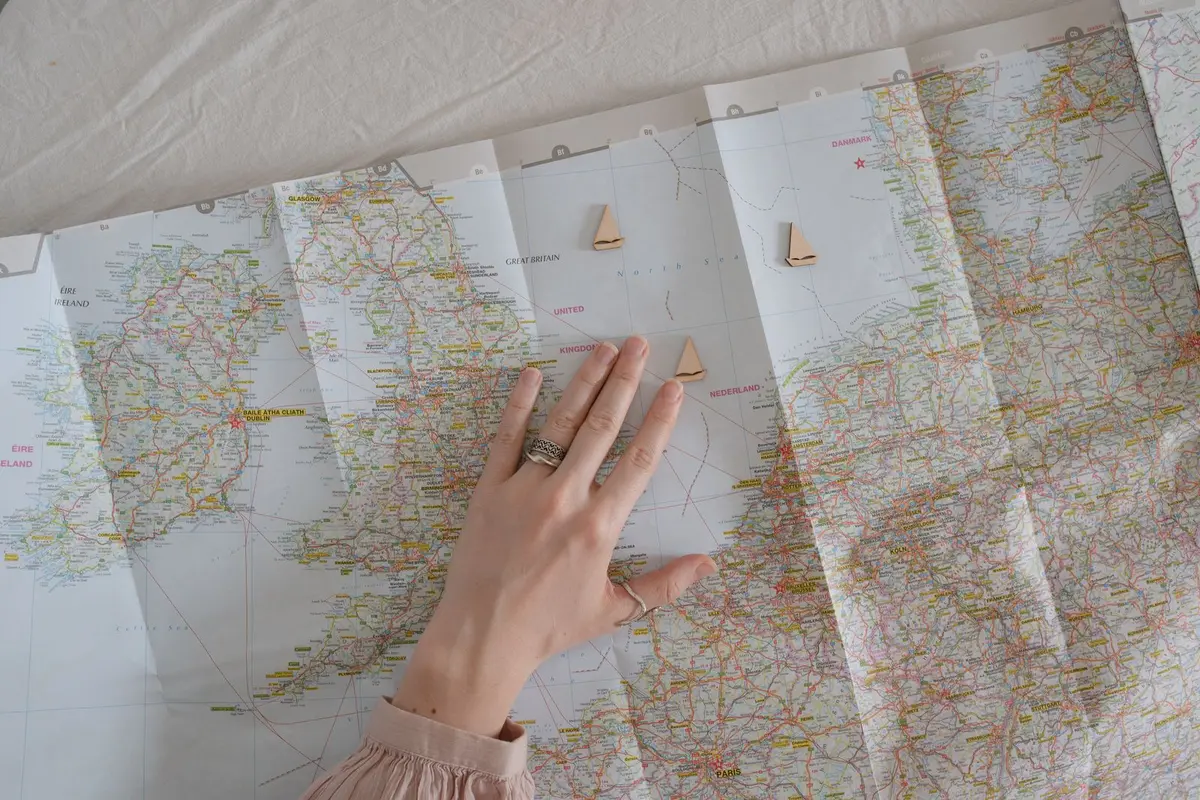
Limit yourself to three major cities connected by high-speed rail to avoid spending your entire trip in transit. Focus on a single region, such as the UK-France-Netherlands corridor or the Italy-Central Europe circuit, to minimize travel fatigue.
- Budget
- $200–$250 USD per day
- Duration
- 14 days
- Best Time
- May, June, or September (avoids the peak heat and crowds of July/August).
- Visa Required
- Depends; check your home country's reciprocity agreements.
Step by step
Pick one geographical theme
Don't try to cover London, Paris, Rome, and Berlin in 14 days. Choose a cluster. For example: London (3 days) -> Paris (4 days) -> Amsterdam (3 days) works perfectly via the Eurostar train.
Use the 3-4-3-4 rule
Allocate 3 or 4 nights per city. This gives you at least 2 full days of sightseeing in each place, plus a buffer day for transit or spontaneous discovery.
Prioritize high-speed rail
Europe’s train network is far superior to budget airlines. Use sites like Trainline or Omio to book trains between city centers. This saves you the 4-hour time block required for airport security and commute.
Limit your 'must-see' list
Pick one major landmark per day (e.g., The Louvre, The Colosseum). Fill the rest of your day with walking, eating, and observing. Over-scheduling is the quickest way to burn out by day 7.
Questions people ask
Should I buy a rail pass?
Usually no. For a 14-day trip with only 3-4 destinations, point-to-point tickets bought in advance are almost always cheaper than a Eurail pass.
How much cash do I need?
Very little. Europe is largely card-based now. Keep €50 in small bills for emergencies, but you can pay for almost everything with a contactless card or phone.
- Notes
- Budget for an additional $500 total for inter-city trains booked in advance.
- Daily Estimate
- Expect to spend $200–$250 USD per day per person, excluding international airfare. This covers mid-range hotels, local transport, entrance fees, and two nice meals per day.
Packing
- A 40L travel backpack or carry-on suitcase only (you will have to carry your luggage over cobblestones).
- One pair of broken-in, waterproof walking shoes; you will likely hit 20,000 steps a day.
- A universal power adapter with multiple USB ports.
- A crossbody bag or anti-theft gear for busy tourist areas.
Itinerary
- 1 — Early dinner near your accommodation to fight jet lag. — Arrive in London; drop bags at your hotel. — Walk the South Bank of the Thames to get your bearings. — Use the contactless payment system on the Tube; don't buy paper tickets.
- 7 — Seine river cruise to see the city lights. — Take the morning Eurostar train from London to Paris (approx. 2.5 hours). — Check into your hotel; walk through the Marais district. — Book Eurostar tickets at least 60 days in advance for the best prices.
- 14 — Flight home. — Final breakfast and souvenir shopping. — Head to the airport 3 hours before your flight. — Ensure you have your passport and any required entry documents physically accessible.