The Precise Geometry of Dry Brushing
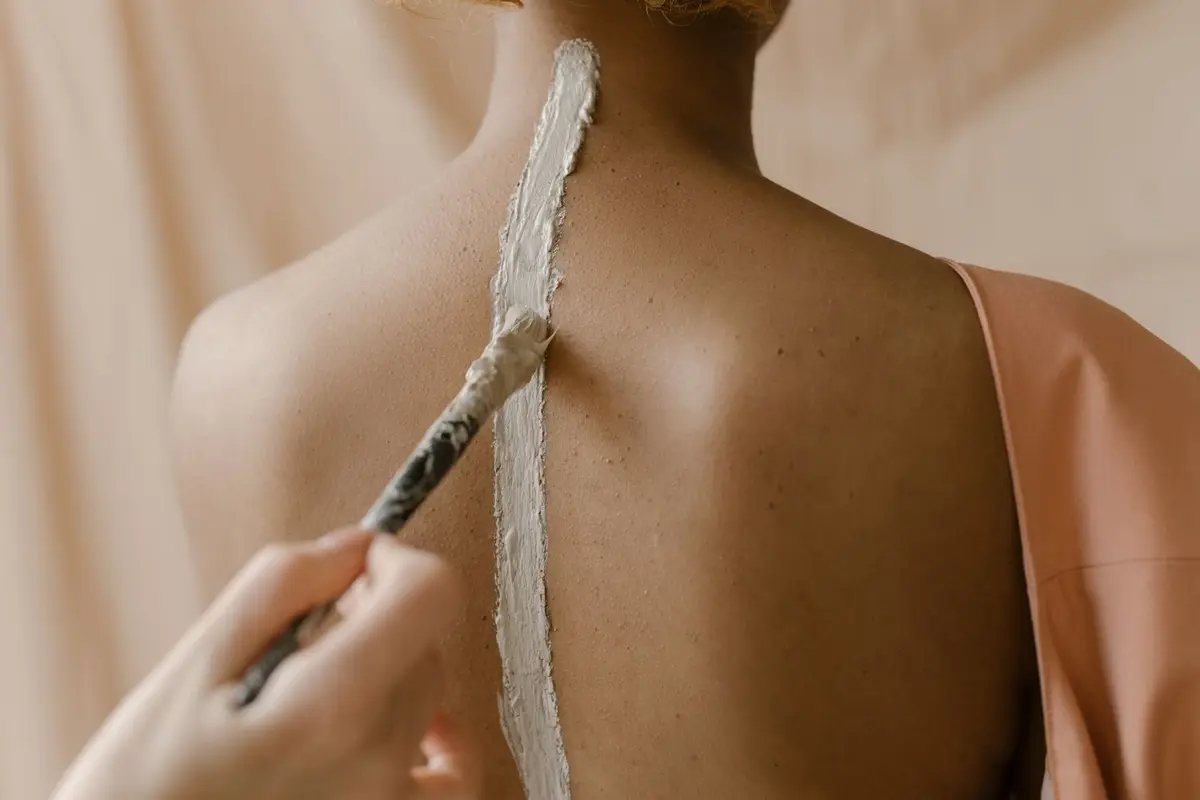
Dry brushing is an exercise in restraint. The objective is the removal of surface-level debris and the stimulation of blood flow via mechanical friction, not the scouring of the dermis. Excess pressure or an excessive number of strokes will lead to irritation rather than the desired smoothness.
Mastering the technique requires understanding the limitation of the tool. By standardizing your motion and limiting the repetition of each pass, you ensure the process remains functional rather than abrasive.
- Difficulty
- Beginner
- Total time
- 10 minutes
- Cost
- Low, once-off tool investment
- Cadence
- Three times per week
Ingredients
- None: Dry brushing is a mechanical process requiring no external products.
Tools List
- Natural fiber body brush with a firm, wooden handle
Step by step
Begin at the extremities
Start with the feet. Using long, fluid motions, brush from the arch of the foot toward the ankle. Perform exactly three strokes per area. Do not repeat a motion over the same patch of skin more than necessary.
Tip: Always maintain the same direction of movement toward the heart.Work upward through the limbs
Move to the calves and thighs. Utilize three broad, steady strokes per section of skin. Avoid the delicate skin behind the knees and focus on the flatter surface area of the muscle. Consistency in speed is more effective than heavy pressure.
Tip: Use your non-brushing hand to keep the skin taut.Address the arms
Position the brush at the fingertips and move toward the armpit. Follow a count of three strokes per segment. Keep the pressure light enough that the bristles bend slightly, but never collapse entirely under the force of your hand.
Tip: If the brush creates a red mark immediately, reduce pressure by half.The torso
Apply the brush to the back and abdomen using a light, circular motion. Keep the stroke count to two per quadrant. Avoid the chest area if your skin is particularly thin or sensitive.
Tip: Use a long-handled brush to reach the center of the back without overextending.Final finish
Finish with a single sweep from the neck toward the shoulders. Do not brush the neck itself. The skin here is too thin for the level of abrasion provided by body-grade bristles.
Tip: Keep the brush movement unidirectional at all times.
Trouble
How much pressure is enough?
The bristles should move across the skin with resistance, not friction. If you hear a scraping sound, you are pressing too hard.
Is a red glow a good sign?
A faint, fleeting warmth is acceptable. If the skin remains red for more than five minutes, you have exceeded the necessary duration.
Can I brush every day?
Daily brushing is generally too frequent. Three times per week allows the skin barrier to reset between sessions.
What happens if I brush too much?
Over-brushing strips the protective lipids on the skin surface. This leads to dryness and a compromise in the skin's ability to retain moisture.
Pressure should be consistent, not aggressive; three strokes are sufficient for any single surface area.
Dry brushing is maintenance, not a deep-tissue treatment. Treat your skin as you would fine fabric.